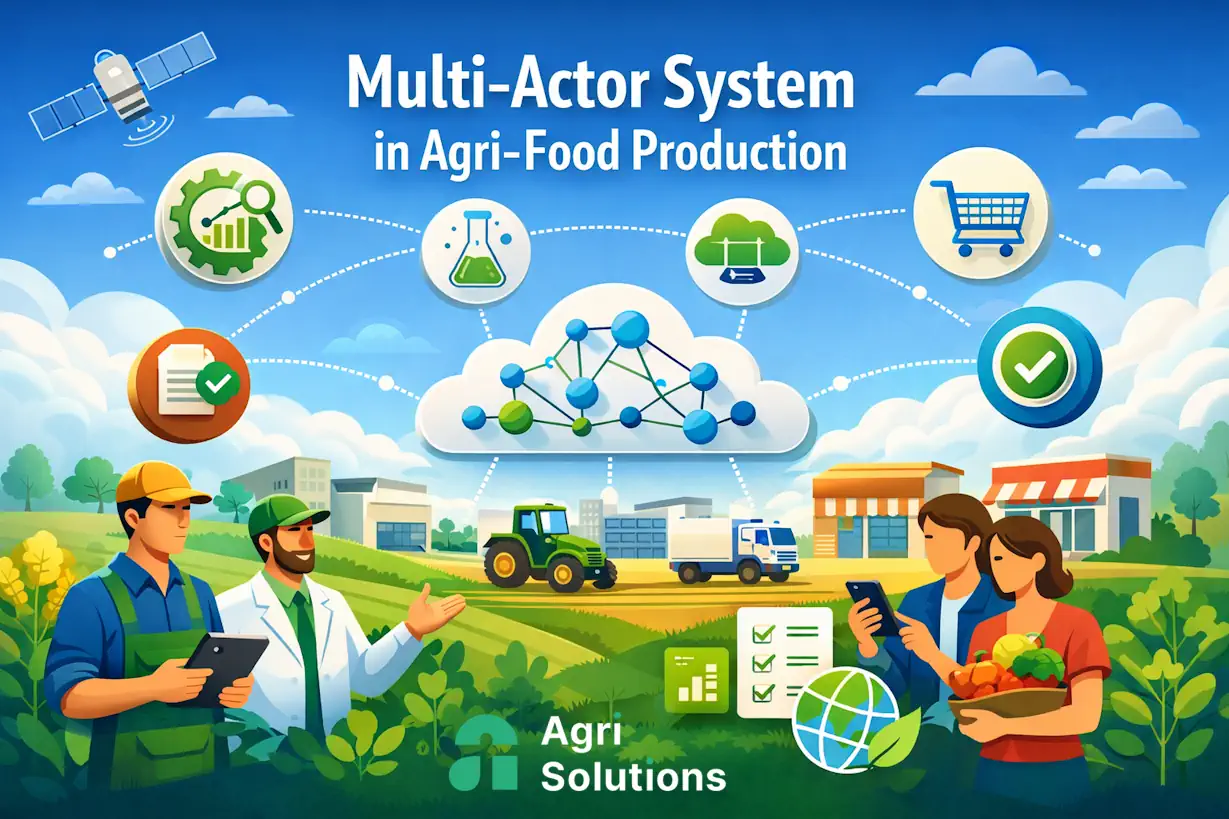
Definition of the Multi-Actor System (MAS)
A Multi-Actor System (MAS) is an organisational and technological approach in which multiple independent yet cooperating entities (actors) participate in the creation, processing, and use of data, knowledge, and decisions within a single production or business ecosystem.
In the agri-food context, this means integrated collaboration between farmers, advisors, processors, distributors, public institutions, technology companies, and consumers, supported by digital platforms, data, and decision-support algorithms.
MAS is not a single IT system, but rather a collaboration architecture in which each actor retains autonomy while operating based on shared standards, data, and objectives.
Why Is the Multi-Actor System Critical for the Agri-Food Sector?
Food production is one of the most complex economic systems. MAS addresses four key market challenges:
1. Complex Food Supply Chains
Food supply chains are among the most complex and sensitive economic systems. They involve multiple independent actors operating across different time horizons, regulatory frameworks, and business objectives. Despite this complexity, key decisions made at the very beginning of the chain—at farm level—have a direct and long-term impact on the performance of the entire system.
Farm-level decisions related to crop varieties, sowing and harvesting dates, fertilisation strategies, crop protection, and climate risk management determine raw material quality, technological parameters, and supply consistency. Even small changes in agronomic practices can affect protein content, sugar levels, moisture, or residue levels, directly influencing processing suitability.
Raw material quality and predictability are critical for processing plants when planning production capacity, work schedules, energy consumption, and workforce availability. A lack of reliable data from primary production leads to excess costs, downtime, or emergency sourcing from alternative suppliers.
Farm decisions also directly affect contracting. Without up-to-date yield and quality forecasts, contracts rely on historical data or declarations, increasing risk for both producers and buyers. Overly optimistic assumptions lead to shortages, while over-contracting results in price pressure and logistical losses.
Logistics is another area strongly influenced by farm-level decisions. Harvest timing, batch sizes, production location, and quality parameters determine transport, storage, and cooling requirements. Poor synchronisation between primary production and logistics increases costs, quality losses, and environmental footprint.
Finally, agronomic decisions directly affect carbon footprint and regulatory compliance across the entire value chain. Production technologies, fertilisation intensity, fuel and energy use, and cultivation practices determine greenhouse gas emissions, resource use, and compliance with regulations such as EUDR, CSRD, and Scope 3 reporting. Without farm-level data, credible environmental reporting of final products is not possible.
In traditional, silo-based supply chains, this information reaches downstream actors with delays or in simplified form, preventing real-time response. The Multi-Actor System changes this paradigm by creating a shared data and decision space for all value chain participants.
With a multi-actor approach, farm-level information becomes available to advisors, processors, and logistics operators in real time or predictive form. This enables continuous coordination, early risk detection, and dynamic adjustment of production, contracting, and logistics plans.
As a result, the supply chain becomes proactive rather than reactive, data-driven rather than fragmented. MAS reduces losses, improves supply stability, enhances operational efficiency, and supports compliance with growing regulatory and market requirements—without shifting the entire responsibility onto a single actor.
2. Regulatory Pressure (EUDR, ESG, CSRD, Scope 3)
The agri-food sector is currently under unprecedented regulatory pressure. New and upcoming EU regulations no longer apply only to individual entities, but to entire value chains—from primary production to final products delivered to consumers. In practice, this requires collecting, integrating, and reporting data from multiple independent actors.
Regulations such as EUDR, CSRD, ESG frameworks, and Scope 3 emissions reporting require documented proof of raw material origin, production conditions, environmental impact, and sustainability compliance. None of these requirements can be fulfilled without direct links to primary production.
The regulatory framework requires access to several key categories of data.
This includes farm-level data covering crop locations, agronomic practices, applied inputs, treatment dates, yields, and quality parameters. These data form the foundation of both environmental reporting and traceability.
Environmental data are also required, including land use, land-use change, deforestation risk, water consumption, greenhouse gas emissions, and biodiversity pressure. In many cases, these must be validated using satellite data and spatial analysis.
Production and logistics data are equally critical, covering delivery volumes, raw material batches, transport routes, processing, and storage. Without linking these data to primary production, Scope 3 reporting and CSRD consistency are not achievable.
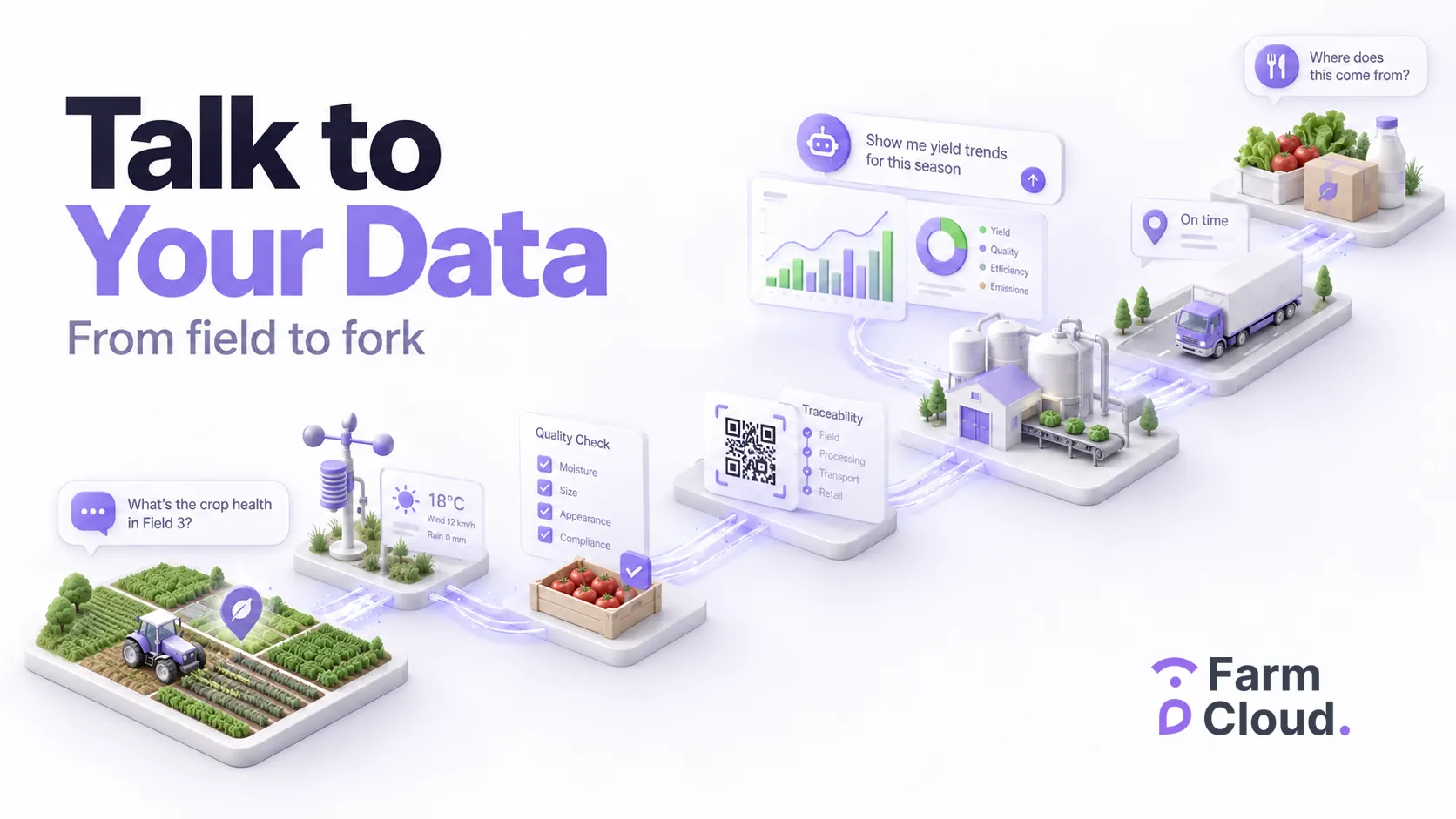
Full traceability is a core requirement. EU regulations demand the ability to trace products “from field to fork,” with clear links between product batches and specific farms, plots, and production practices. Traceability must be auditable, consistent, and resilient to manual errors.
In this context, the multi-actor approach is no longer a technological choice, but a prerequisite for regulatory feasibility. Silo-based reporting leads to manual data collection, duplication, inconsistent formats, and high operational costs, often resulting in incomplete or non-compliant reports.
The Multi-Actor System distributes data responsibility across the value chain while preserving actor autonomy. Data are generated where they originate—on farms, by advisors, processors, and logistics operators—and integrated into a coherent reporting ecosystem.
As a result, EUDR, ESG, CSRD, and Scope 3 reporting becomes a continuous data management process that supports business decisions, reduces regulatory risk, and builds competitive advantage in the European market.
Organisations adopting a multi-actor approach gain better supply chain control, improved operational transparency, and increased trust from regulators, business partners, and consumers.
3. Digitalisation and AI in Agriculture – Why a Multi-Actor Approach Is Essential
Digitalisation and artificial intelligence are transforming agricultural planning and production. Satellite data, IoT sensors, farm management systems, and advanced analytics form the foundation of precision agriculture. However, technology alone does not guarantee success. The effectiveness of predictive, disease, and economic models depends on how data are collected, integrated, and used in practice.
AI models deliver real value only when built on data from multiple sources and actors across the agri-food chain. Data limited to a single farm or region fail to capture the full variability of soils, climate, and technologies. A multi-actor environment enables the integration of farm data, advisory inputs, IoT systems, satellite imagery, and market data, supporting scalable and resilient models.
Equally important is the ability of models to operate across diverse production conditions. Crop responses to stress, disease, or fertilisation depend on soil type, microclimate, variety, and management practices. Models trained on narrow datasets quickly lose accuracy in real-world conditions. MAS enables continuous calibration using operational data from multiple regions, seasons, and production systems.
Operational adoption is another critical factor. Even the most advanced algorithms create no value if their outputs remain disconnected from daily decisions. In a multi-actor environment, AI recommendations are embedded directly into tools used by farmers, advisors, and production managers, supporting operational processes such as treatment planning, contracting, and risk management.
A key strength of MAS is the feedback loop it enables. Decisions informed by AI generate real production outcomes that feed back into the system, creating a continuous learning cycle linking data, models, decisions, and results. Model accuracy improves as the ecosystem evolves.
In practice, this means AI in agriculture cannot function as an isolated analytical tool. Its effectiveness depends on collaboration, continuous data flows, and shared learning. The multi-actor approach creates the conditions for AI to support productivity, sustainability, and resilience across the agri-food sector.
4. Production Resilience and Stability in a Multi-Actor System
Production resilience and stability have become critical challenges for the agri-food sector. Climate volatility, rising production costs, price instability, and regulatory pressure render traditional, reactive management models insufficient. MAS enables a shift toward predictive, data-driven management supported by collaboration across the value chain.
Yield forecasting is a cornerstone of resilience. In a multi-actor environment, forecasts combine satellite, weather, agronomic, and historical data rather than relying on declarations or simplified statistics. This enables yield predictions at field, farm, producer group, and regional levels with sufficient lead time for operational and commercial decisions.
MAS also supports climate risk management. Extreme weather events such as droughts, frosts, heavy rainfall, and heatwaves are local and dynamic. The system enables continuous monitoring, impact analysis at crop level, and scenario modelling. These insights are shared across farmers, advisors, and buyers, enabling coordinated mitigation actions.
Production stability directly translates into raw material supply stability. Processors and distributors gain access to aggregated, reliable data on availability, quality, and delivery timing, reducing uncertainty and emergency interventions while supporting long-term, data-driven relationships with producers.
Contracting and pricing also benefit from a multi-actor approach. Yield forecasts, cost analyses, and climate risk assessments support contracts aligned with real production conditions. Scenario simulations reduce risk for both producers and buyers, turning contracting into a shared risk management mechanism rather than risk transfer.
As a result, MAS strengthens sector-wide resilience through better coordination, earlier insight, and shared responsibility. Production becomes more predictable, supply more stable, and pricing decisions more transparent and data-driven.
Who Are the Actors in an Agri-Food Multi-Actor System?
In practice, the agri-food sector is highly fragmented. The Multi-Actor System structures this complexity by clearly defining roles and relationships among key ecosystem participants:
Farmers and primary producers
- source of production data,
- crop and livestock information,
- agronomic practices and production technologies,
- costs, yields, and raw material quality parameters.
Agronomic and technical advisors
- interpretation of production and environmental data,
- development of agronomic recommendations,
- disease model design,
- fertilisation and crop protection strategies.
Processors and food manufacturers
- raw material quality management,
- contracting and producer relations,
- production and capacity planning,
- carbon footprint analysis,
- traceability assurance.
Distributors and retail chains
- demand for stable supply of raw materials and products,
- quality control and standards compliance,
- supply chain transparency requirements,
- predictability of volumes and delivery schedules.
Public institutions and certification bodies
- agencies and inspections (e.g. paying agencies, quality authorities),
- certification bodies (BIO, GlobalG.A.P.),
- regulatory compliance oversight (EUDR, ESG),
- public administration and regulators.
Technology companies and data providers
- FMS platforms and production management systems,
- IoT solutions and environmental sensors,
- satellite data and EO analytics,
- AI models and predictive analytics,
- ERP and CRM integrations.
Consumers and the market
- increasingly informed and active participants,
- expectations regarding product origin,
- transparency of quality and production processes,
- interest in environmental impact and sustainability.
How Does a Multi-Actor System Work in Practice?
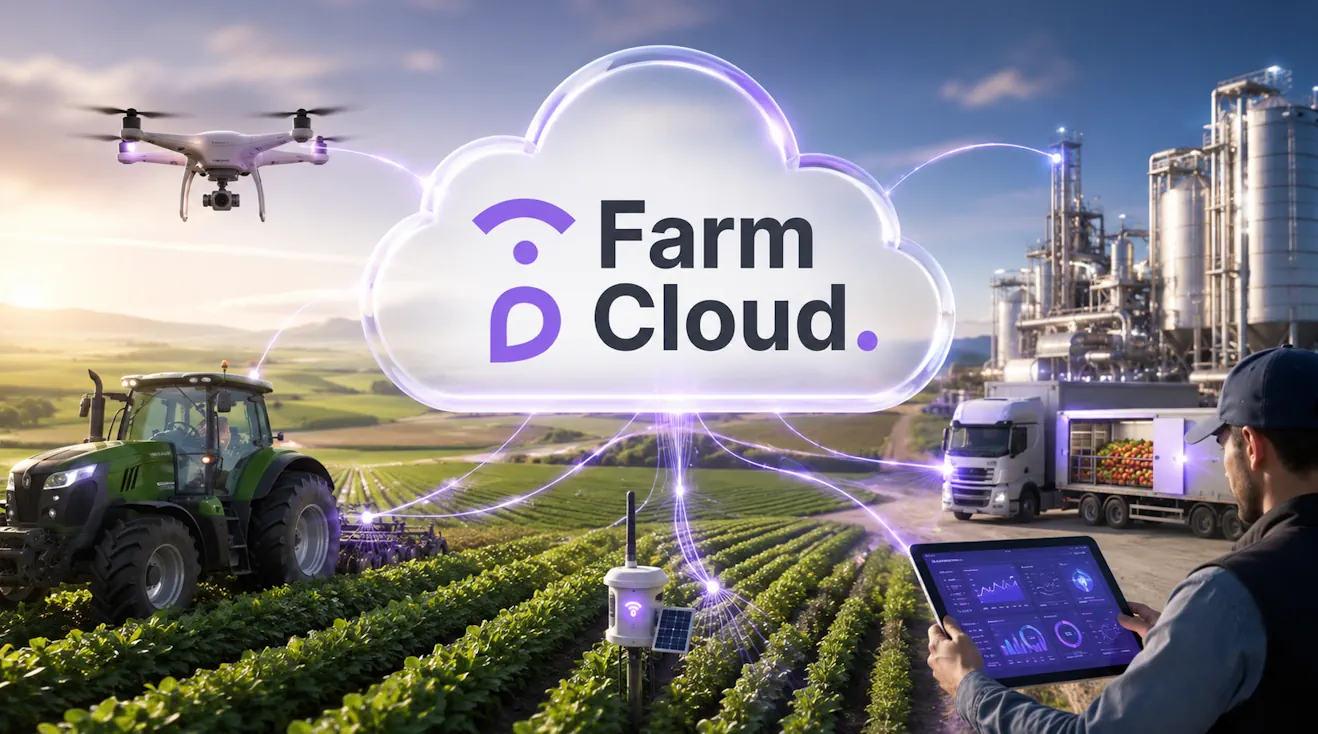
A Multi-Actor System (MAS) in agri-food production is an operational collaboration model connecting data, processes, and decisions across multiple independent entities into a coherent digital ecosystem—similar to the one provided by FarmCloud and its applications FarmPortal, FoodPass, AgroSell, and Agri Insights. Its effectiveness is based on a shared data platform, actor autonomy, and shared decision-support models. The key outcome is a tangible impact across the entire food supply chain, from field to consumer.
Shared data platform
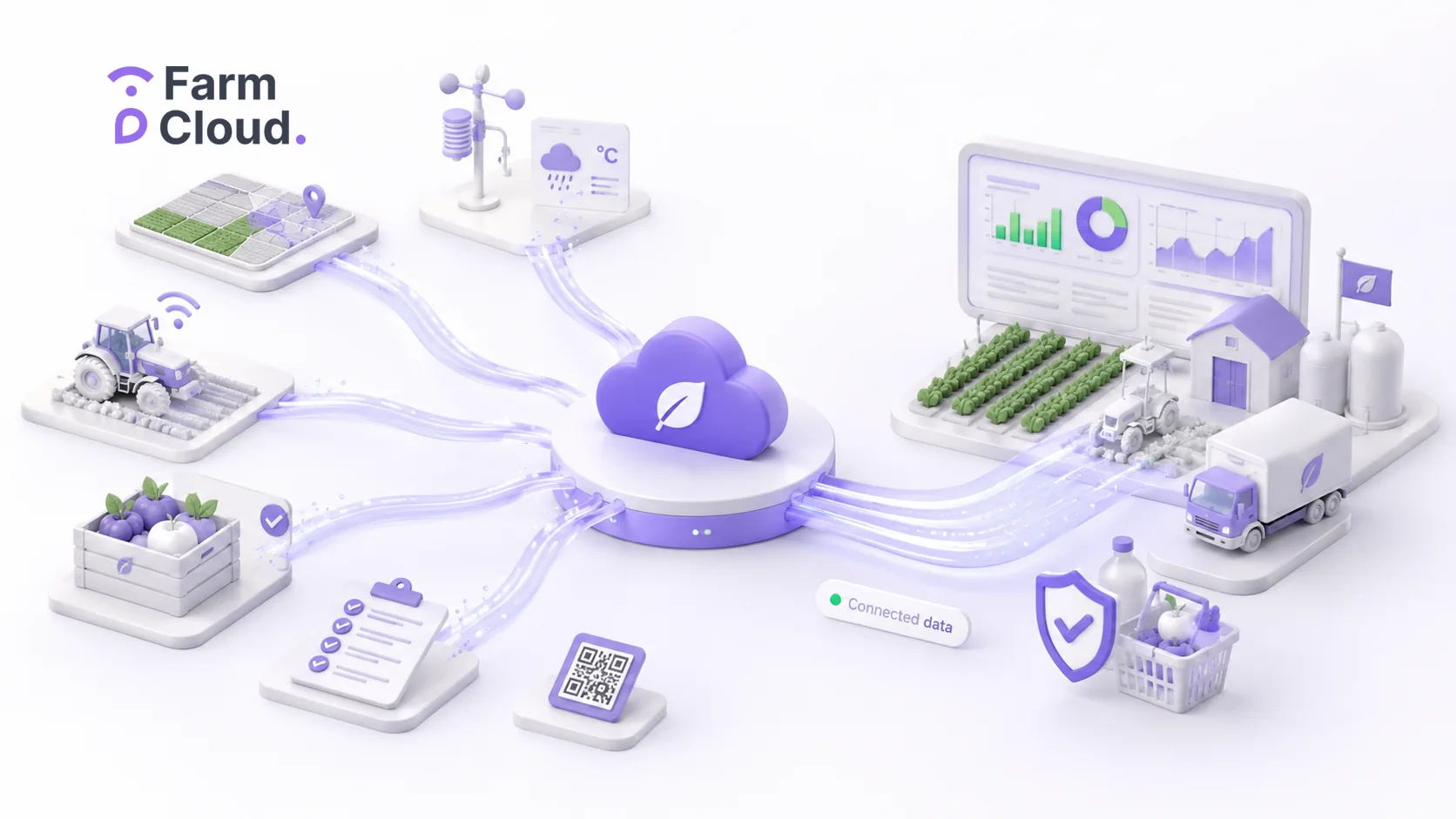
The core of MAS is a shared digital platform acting as a neutral integrator of data and processes. Platforms such as FarmCloud aggregate data from farms, IoT sensors, weather systems, satellite imagery, agricultural machinery, and ERP and CRM systems used by processors, distributors, and retailers.
This integration creates a unified, up-to-date source of information on production, quality, and origin. It enables real-time process management, rapid response to quality deviations, and improved operational planning across the agri-food supply chain.
The platform provides precise access control through roles and permission levels, including data aggregation and anonymisation. Each participant sees only the data required for their business, advisory, or regulatory responsibilities.
MAS relies on interoperability and open standards such as APIs, ISO-XML, and GS1, enabling integration with existing IT systems while ensuring scalability and cross-border readiness.
Actor autonomy
MAS preserves full autonomy for all participants. Farmers, advisors, processors, and other actors operate using their own processes, objectives, and IT systems, while the platform serves as a collaboration environment rather than a central authority.
Each participant decides which data to share, with whom, and under what conditions. Clear rules, agreements, and business objectives govern data sharing, building trust and enabling gradual expansion of cooperation.
This autonomy makes MAS flexible and resilient, allowing participants to join or adjust cooperation scope without destabilising the system.
Shared decision-support and analytical models
The greatest value of MAS lies in shared decision-support models built on data from across the agri-food ecosystem. Combining agronomic, environmental, technological, and economic data enables tools supporting operational and strategic decisions.
MAS enables disease and agronomic models integrating weather data, satellite imagery, and field observations, supporting joint planning of crop protection and fertilisation while reducing risk and input overuse.
The system supports yield and quality forecasting at field, farm, producer group, and regional levels. These insights enable early contracting, logistics planning, and capacity management, reducing shortage and oversupply risks.
Profitability calculations and economic analyses link production costs with yield forecasts, market prices, and climate risks, enabling data-driven decision-making.
Impact of MAS on food supply chains
Within MAS, the supply chain evolves from isolated links into a coordinated ecosystem. Shared data synchronise primary production with processing and market demand, increasing stability and reducing losses.
Early detection of weather, disease, or quality risks enables proactive responses across the chain. Processors gain predictability, while farmers benefit from more stable contracting conditions.
Quality control and traceability
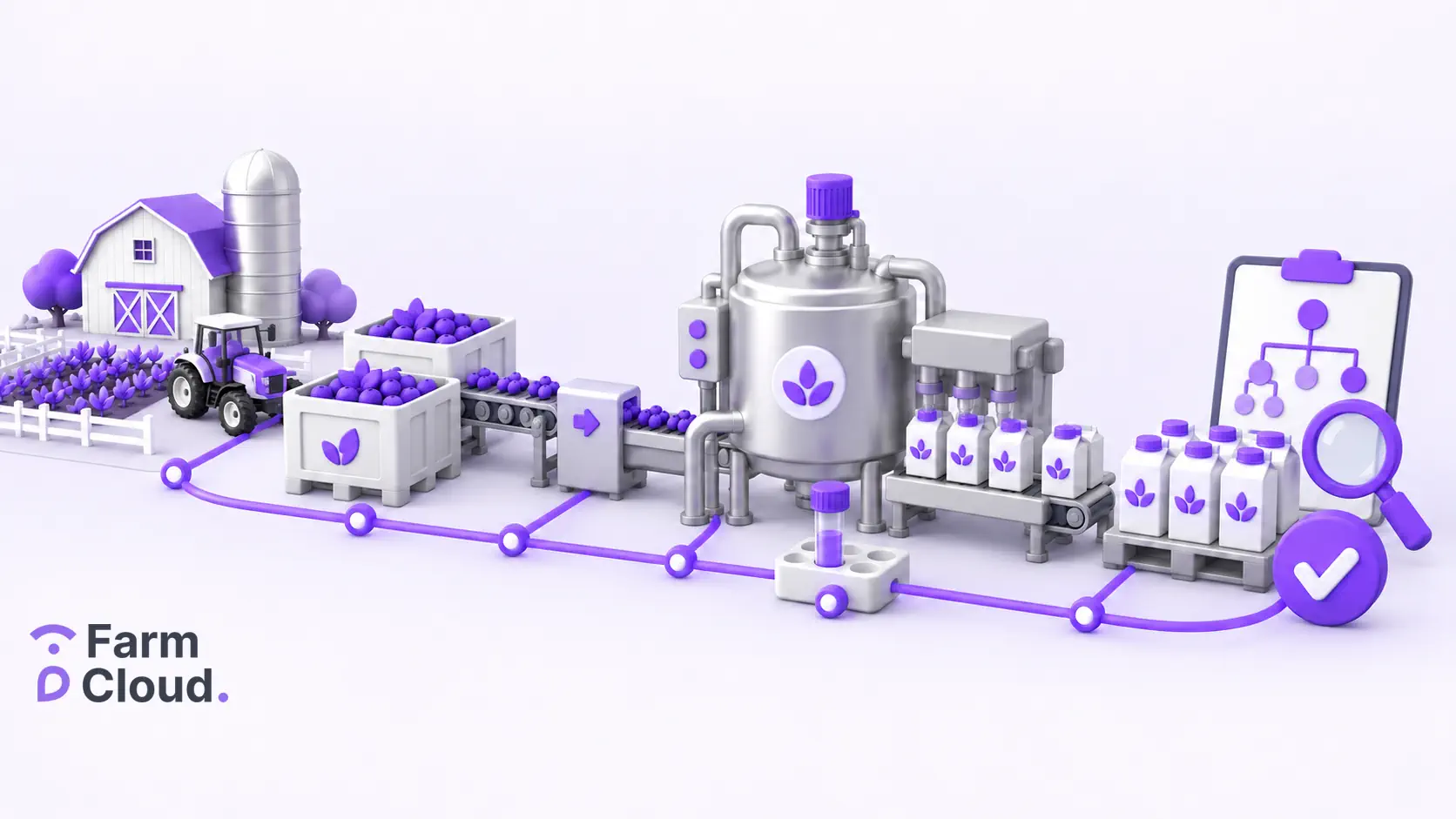
MAS significantly strengthens quality control and traceability. Data on crops, practices, environmental conditions, and harvests are linked to raw material batches entering processing, enabling full “field to fork” traceability.
Quality issues can be quickly traced to their source, reducing recall costs and supporting compliance with GlobalG.A.P., EUDR, and quality standards.
Collaboration between advisors and farmers
MAS transforms advisory services from reactive to continuous and data-driven. Advisors access real-time farm data, while farmers receive recommendations aligned with actual production conditions.
Shared data reduce misunderstandings, shorten decision cycles, and make advisory services measurable, scalable, and more valuable for all stakeholders.
Impact of MAS on consumers
Although consumers are not direct users of MAS platforms, they are key beneficiaries. MAS delivers products with predictable quality, verified origin, and documented environmental impact.
Access to information on production methods and certifications builds trust in brands and the food value chain. MAS also enables digital product passports, responding to growing expectations for transparency and sustainability.
As a result, MAS improves production and logistics while strengthening the relationship between producers and consumers, making the agri-food value chain more resilient, transparent, and competitive.
Examples of Multi-Actor System Applications with FarmCloud
- contract farming based on real yield forecasts,
- traceability from field to fork,
- digital food passports,
- EUDR and ESG reporting for processors,
- advisory platforms for producer groups,
- Living Lab and Test Farm projects,
- R&D projects funded by Horizon Europe and EIT Food.
Multi-Actor Systems and Innovation and R&D
The European Union consistently promotes the multi-actor approach in research and innovation projects. This ensures that:
- innovations are co-created with end users,
- farmers and processors act as solution co-creators,
- research outcomes reach the market faster.
MAS increases real-world impact, shortens time to market, and reduces the risk of misaligned solutions.
Summary
The Multi-Actor System is not a trend—it is a new standard in agri-food production. FarmCloud provides the technological and organisational foundation for its implementation, connecting farmers, advisors, processors, and data into a single, coherent ecosystem.
By adopting a multi-actor approach, the agri-food sector can move from reactive management to a predictive, sustainable, and data-driven food production model.
In an era of climatic, regulatory, and market pressure, no single actor can operate effectively in isolation. MAS enables the transition from fragmented actions to intelligent management of the entire food value chain.
Follow us!
Preview what we are doing and be inspired by positive changes.