Software for digitalizing the Farm to Fork strategy
Data about growers, deliveries, raw material batches, quality control, storage and production connected into one coherent flow of information.
Supply chain digitization for processing
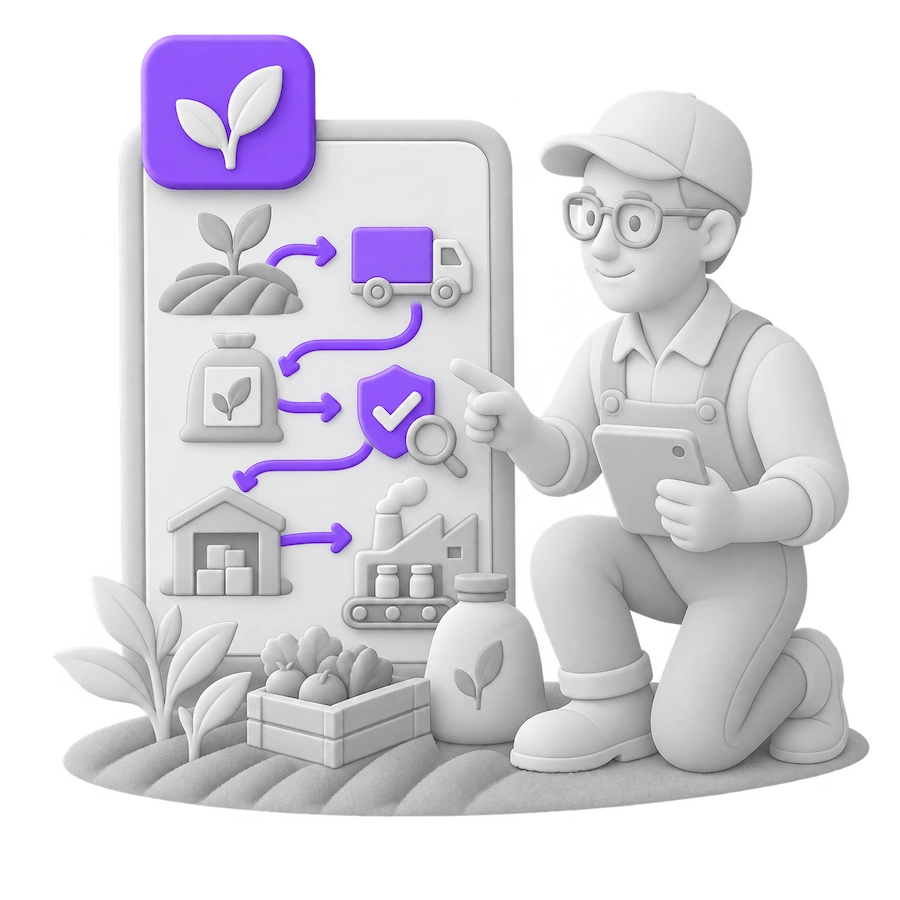
Supply chain digitization consists of connecting data about producers, deliveries, batches, quality and production in one flow of information.
Information about suppliers, contracts, planned and completed deliveries, raw material batches, documentation, quality and further use of raw material is managed in one FoodPass system.
This makes it possible to check delivery status, batch origin or documentation completeness without having to search several separate sources. Data entered earlier is also used at later stages of the process, without the need to re-enter it.
 Cooperation between producers and processors
 Food quality and safety control
 Resource monitoring and loss reduction
 Batch traceability and raw material origin
 Support for organic processing
 Shortening the supply chain
Value chain management software for the agri-food sector
Connect data from farms, raw material deliveries, production, quality and distribution in one coherent process, ensuring full traceability, control and transparency across the entire agri-food chain.
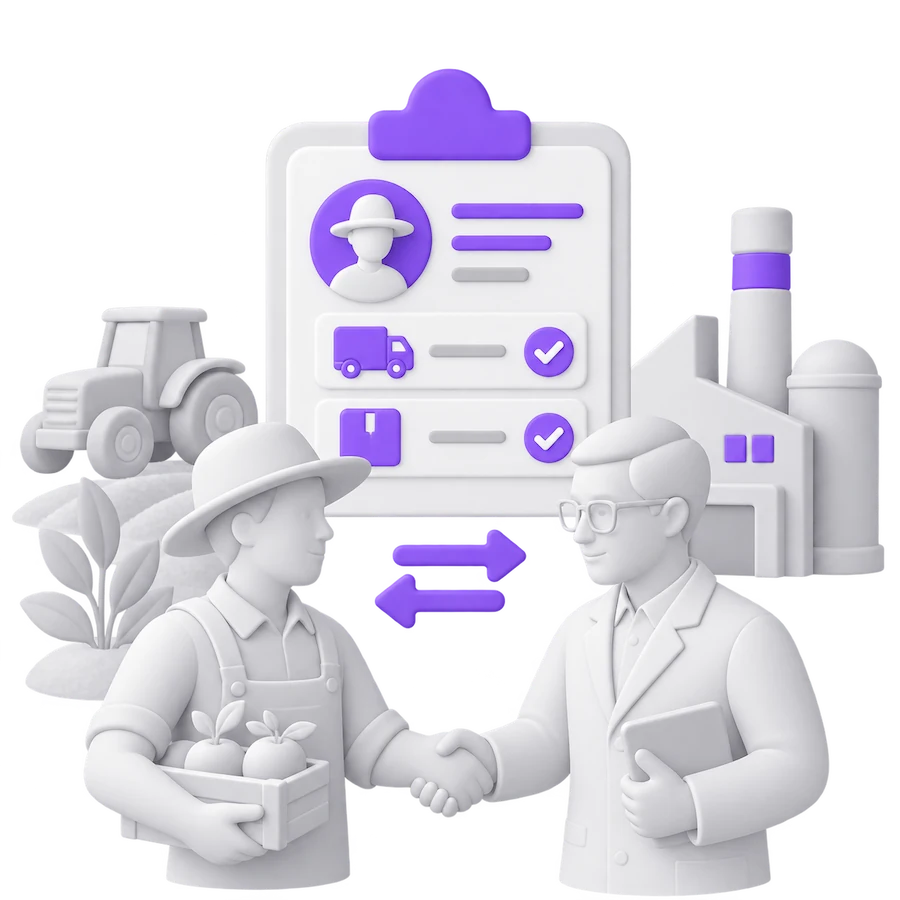
Supporting cooperation between producers and processors
The Farm to Fork strategy promotes lasting cooperation between farms, producer groups, advisors and processing plants. It includes joint production planning, knowledge exchange and clear definition of quality requirements.
Information about crops, harvest dates, delivery volumes and raw material quality helps processors plan ahead, while giving farmers better advisory support and greater sales predictability.
Transparent data about batch origin builds trust and improves quality control. Direct cooperation shortens the value chain, reduces intermediaries and allows a larger share of product value to remain with the producer.
Batch and raw material origin tracking
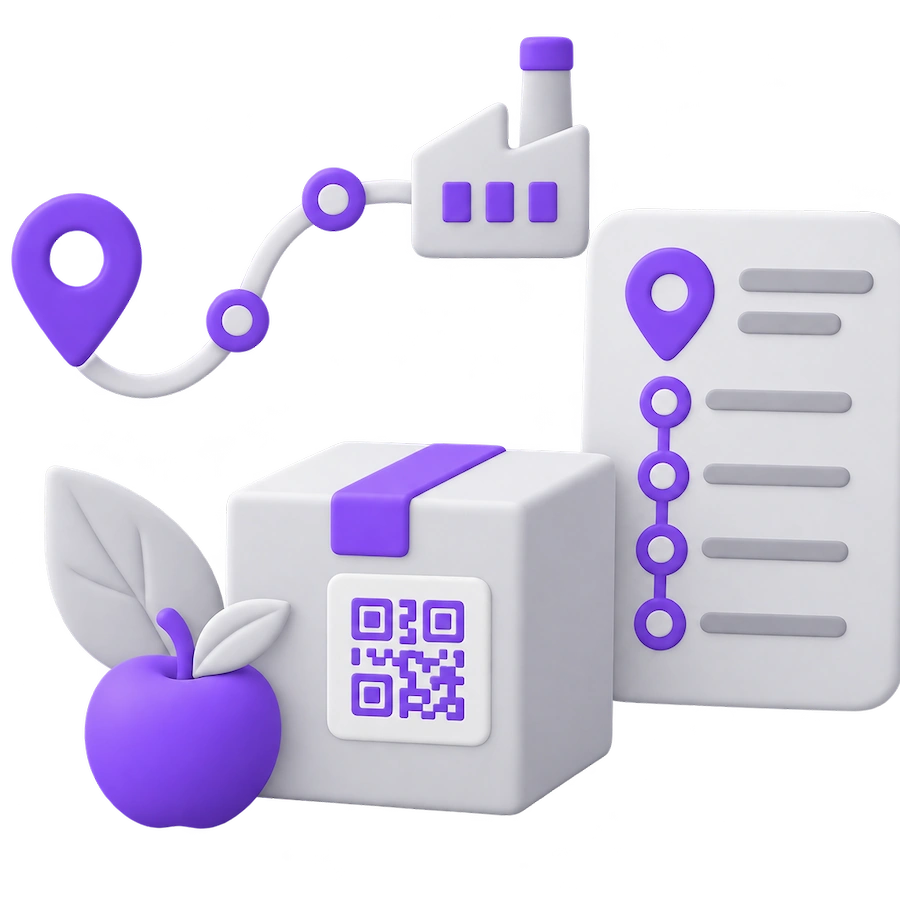
Raw material traceability begins on the specific agricultural plot from which a given crop batch originates. Linking information about the place of cultivation and the course of production with delivery, quality control, storage and the processing process makes it possible to trace the full path of the product — from the field to the finished product batch.
agricultural plot → crop batch → raw material delivery → quality control → storage → production process → finished product batch
The traceability system makes it possible to check which farm and plot the raw material came from, when it was harvested and delivered, what quality parameters it had and for the production of which goods it was used. This makes audits, explaining non-conformities and quickly identifying batches requiring withdrawal easier.
A QR code or batch number can be used to identify raw material and product, but only linking it with data about cultivation, delivery, quality, storage and production ensures full traceability. As a result, the code is not just a label, but access to the history of a specific batch.
Food quality and safety control
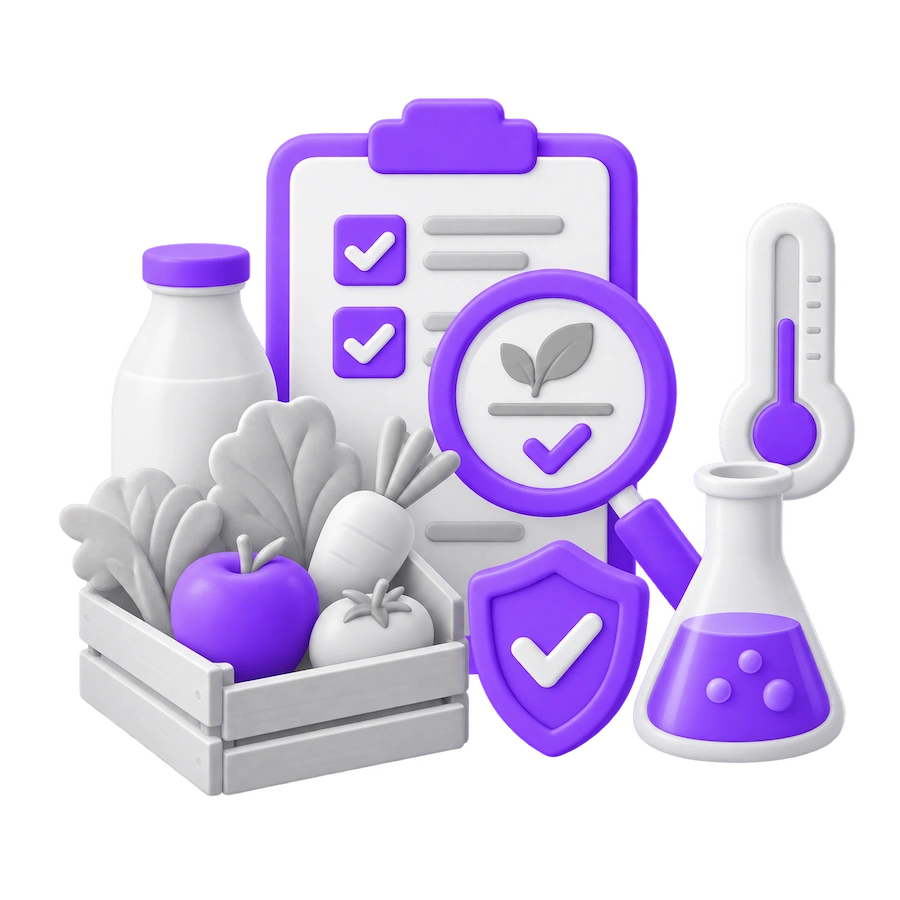
Quality control begins already on the farm. It includes supplier audits, assessment of cultivation and storage conditions, verification of documentation and certification status, including organic production or GLOBALG.A.P. The system enables planning audits, tasks and corrective actions, as well as quick access to the history of cooperation, deliveries and results for a given producer.
Sampling can be planned in the field, during delivery intake or in the warehouse. Each sample follows an organized workflow — from ordering and collection, through transfer to the laboratory, to result approval. Integration with the laboratory streamlines data exchange, while quality, microbiological and crop protection residue test results are stored with the relevant plot, supplier and raw material batch.
Based on test results and accepted criteria, a batch may be accepted, quarantined, blocked, conditionally released for production or rejected. Data goes into the product batch passport, supporting traceability, audits, certification and rapid explanation of non-conformities and product withdrawals from the market.
Identification and control of organic batches
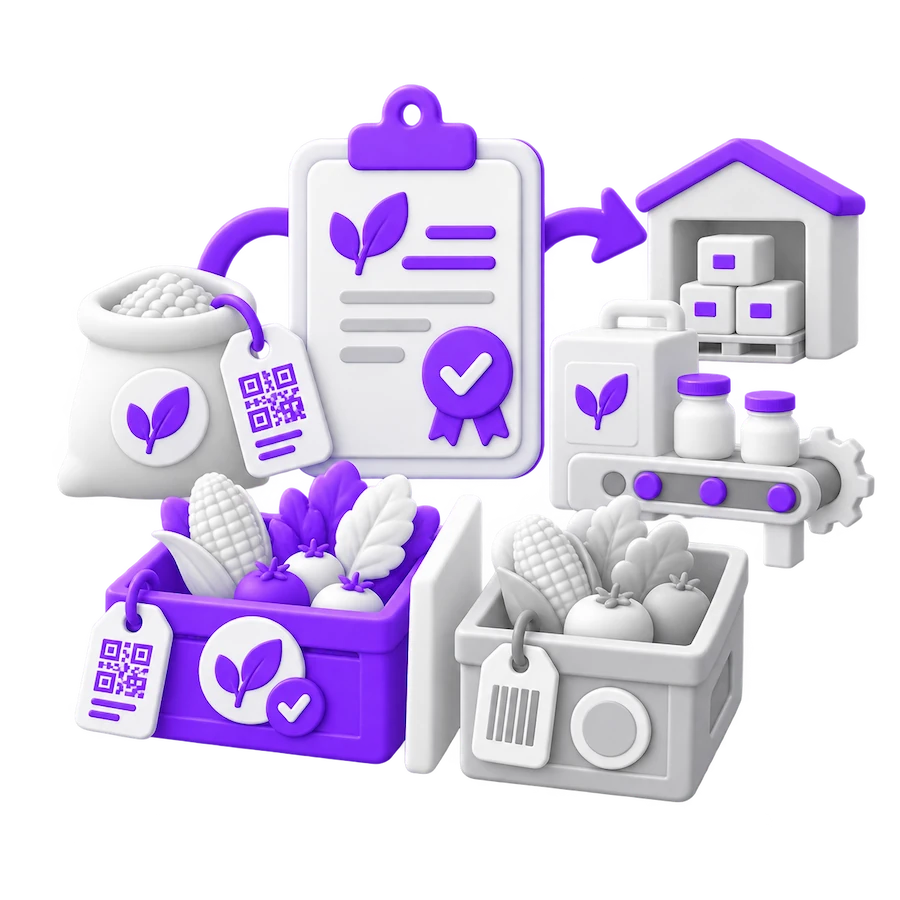
Organic production requires full raw material traceability and a clear separation of organic and conventional batches. For each delivery, data such as the farm and plot of origin, batch number, certificate status and validity, supplier documents, inspection results and raw material destination are recorded.
At the intake, storage and production stages, the system supports batch segregation, raw material flow control and prevention of mixing. If required documents are missing, the certificate expires or a non-conformity is found, the batch may be blocked or sent for additional verification.
Connecting data from successive process stages makes mass balance management easier, supports preparation for certification body inspections and enables reconstruction of batch history — from the farm to the labelled organic product.
Shortening the supply chain
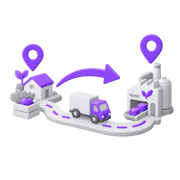
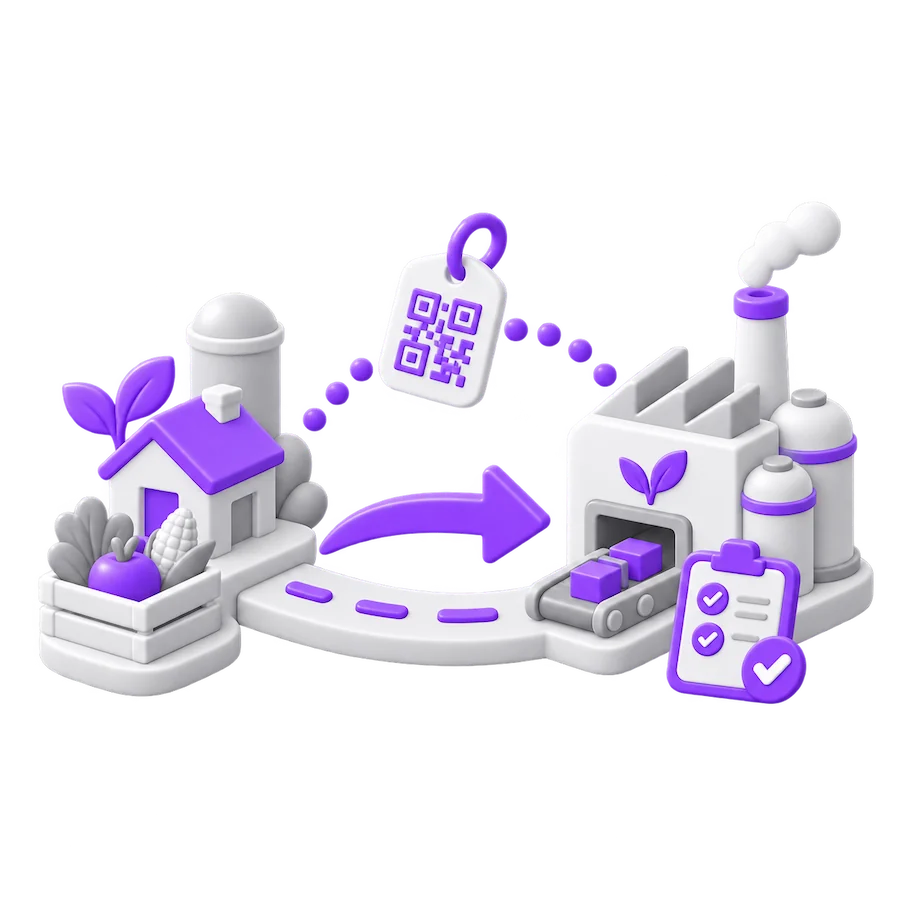
Shortening the food supply chain is based on directly linking the agricultural producer, raw material delivery, production batch and processing plant. Data about raw material origin, contracting, quality and delivery history supports traceability, supply planning and cooperation between farmers and processors. A shorter value chain means fewer intermediate stages, better traceability of agricultural products and a more efficient flow of information from the farm to processing.
Digitally linking the producer, delivery and raw material batch supports local agri-food processing, delivery organization and the development of short supply chains from farm to fork.
Production and resource monitoring
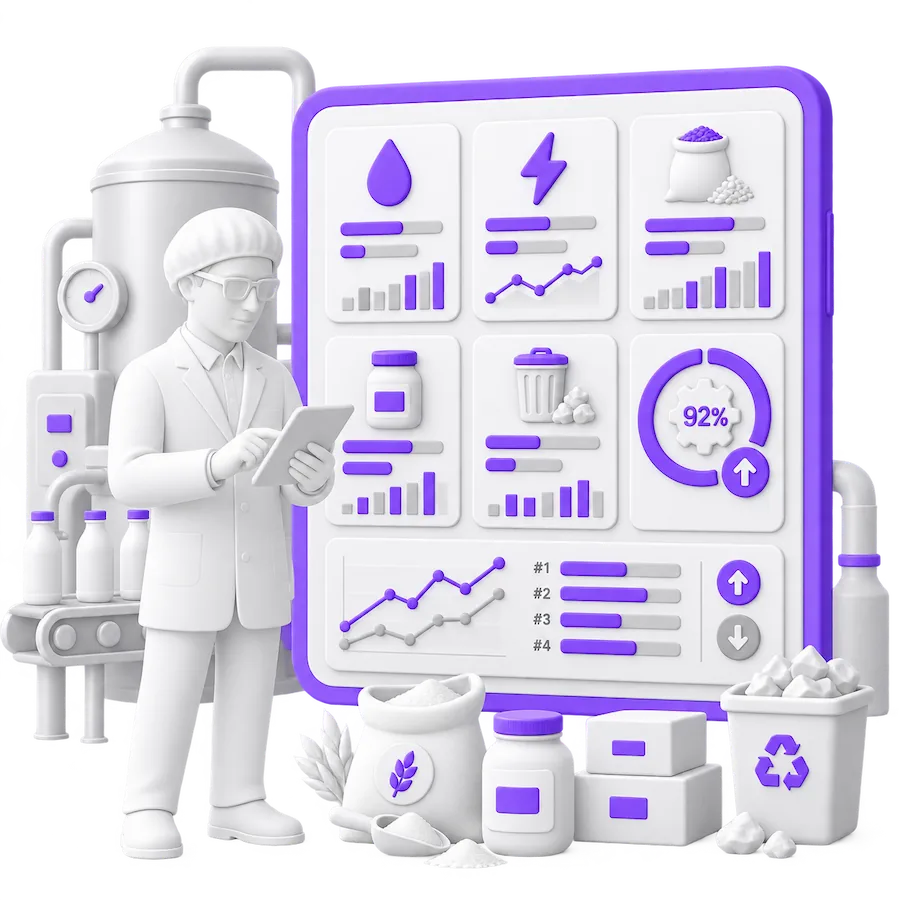
By integrating with devices in the processing plant or IT systems such as ERP, it is possible to collect selected data related to resource use and process efficiency.
Information such as water and energy consumption, amount of raw material used, finished product, losses, waste or rejects is assigned to a batch, line or process.
This data can be used to compare batches and processes and identify places where the greatest deviations, problems and errors occur. Combining the data with production information supports monitoring, efficiency and safety of food production as well as process efficiency assessment.
Environmental data and sustainable production from farm to fork
Precision agriculture, soil data and environmental impact monitoring
Regenerative and sustainable agriculture
Documentation kept at farm and field level includes, among others, crop rotation, cover crops, fertilization, plant protection, soil cultivation practices, water management and use of production inputs. The collected data makes it possible to monitor the impact of applied practices on soil fertility, nutrient balance, water retention, biodiversity and emissions.
Systematic performance assessment enables season-to-season comparison, planning of corrective actions and confirmation of compliance with regenerative agriculture standards, environmental requirements, certification programs and criteria defined by raw material buyers.
Environmental impact and carbon footprint
Environmental impact assessment covers data from the farm, transport and processing plant, including the use of fertilizers, plant protection products, fuel, water and energy, operation of cooling installations, amount of waste and emissions generated at subsequent stages of production.
Linking this information with the supplier, delivery, raw material batch and finished product makes it possible to calculate the product carbon footprint and identify stages with the greatest environmental impact. Structured source data supports ESG and Scope 3 emissions reporting, LCA analyses and the MRV process - measurement, reporting and verification of the effects of reduction actions.
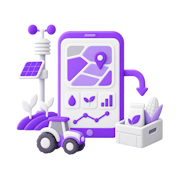
Precision agriculture and data management
Precision agriculture is based on combining data from weather stations, soil sensors, satellite imagery, agricultural machinery and treatment documentation. Information assigned to a specific field and crop makes it possible to monitor plant condition, forecast yield and precisely plan fertilization, plant protection and irrigation. It can also be used to create application maps and variable-rate input dosing.
The digital field history makes it possible to link applied practices, use of production inputs and growing conditions with the harvested crop batch. This data can then accompany the raw material during delivery and processing, supporting traceability, quality control and environmental impact assessment across the entire value chain.