What are we announcing?
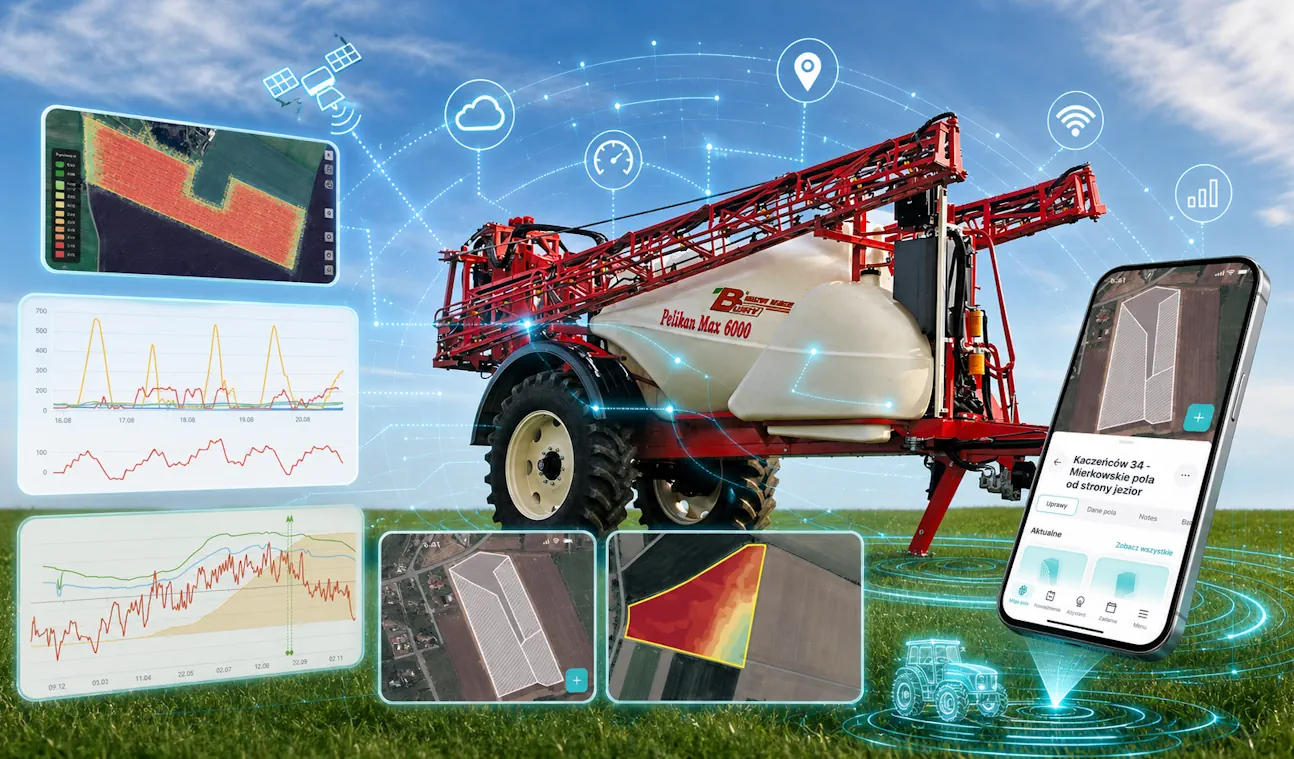
Agri Solutions is beginning cooperation with Bury Maszyny Rolnicze in a model where FarmCloud becomes a digital platform supporting the development of the machinery manufacturer’s offering. FarmPortal will be connected with the Bury brand and will serve as a practical tool for machine users: from treatment records and operational data to service support.
For Bury, this means a faster entry into a new digital era without the need to build the entire software ecosystem from scratch. For Agri Solutions, it confirms the FarmCloud strategy: to provide a ready-made platform that can be integrated with machinery manufacturers, agri-business companies, advisors, distributors and organisations working with farmers.
More information about the ecosystem is available on the FarmCloud - application platform for the agri-food sector website.
Why is Bury integrating with FarmCloud?
Bury Maszyny Rolnicze operates in a segment where technological advantage no longer ends with machine construction. A sprayer, cultivation machine or other agricultural equipment is increasingly becoming part of a broader process: work planning, treatment documentation, cost analysis, service operations and data exchange.
FarmCloud shortens the path from concept to implementation. Instead of creating its own system from scratch, an OEM manufacturer can integrate with a ready-made platform covering FarmPortal - FMS, farm data, users, fields, crops, agronomic treatments, maps, sensors, telemetry and precision agriculture elements.
This approach brings three strategic benefits. First, Bury can offer customers modern digital functions faster. Second, it can develop its own relationship with users after the machine is sold. Third, it can build better knowledge of how products operate in real field conditions.
What will Bury gain as an OEM manufacturer?
OEM means original equipment manufacturer. In agriculture, this refers to a company that designs and manufactures machines, but increasingly also needs to provide digital services around those machines. Today, customers expect not only robust equipment, but also fast service, access to spare parts, data, documentation and support in everyday work.
Integration with FarmCloud can help Bury develop its offering in several directions at once: from farmer support in the application, through fleet and service management, to machine performance analysis and the development of new digital services. This is not only an IT project. It is part of a product, marketing and after-sales strategy.
7 strategic benefits for Bury
- Faster launch of a digital offering. Bury can use the ready-made FarmCloud platform instead of building its own system from scratch.
- A branded version of FarmPortal for customers. Farmers using Bury machines can receive a tool consistent with the manufacturer’s brand.
- Insight into service and operational data. Bury can better analyse product performance in the field, service requests, usage history and typical operational issues.
- Better fleet and service management. Data on machines, inspections, requests and spare parts can support shorter response times and more structured customer service.
- Potential for online spare parts sales. FarmCloud can become a digital channel guiding the user from a technical problem to the right spare part, contact or store.
- Development of predictive maintenance. Predictive maintenance means forecasting service needs based on data before a failure stops the machine from working.
- A stronger technology brand. Bury demonstrates that a Polish manufacturer can implement digital functions known from large Western machinery ecosystems.
What will farmers and Bury machine users gain?
The farmer remains the most important end user. The farmer works with the machine during the season and is responsible for treatment timing, documentation, costs, compliance requirements and work organisation. That is why FarmCloud’s integration with Bury makes sense only if it delivers practical value on the farm.
FarmPortal - farm management software - can connect data on fields, crops, treatments, plant protection products, machines, costs and work history. As a result, a Bury machine user gains not only equipment, but also digital support around its use.
| Area | Value for the farmer | Value for Bury |
|---|---|---|
| Digital treatment documentation and reporting | Easier management of field history, treatments, dates, rates and products used. | Better customer support in documentation and compliance. |
| Support for compliance with requirements and regulations | Faster preparation of data for inspections, audits, advisors or buyers. | Building added value around the machine, especially in the sprayer segment. |
| Machine telematics and operational data | Insight into machine work, usage history, location and completed tasks. | Analysis of products working in the field and better service decisions. |
| Service and maintenance reminders | Lower risk of missing an inspection, check-up or seasonal maintenance activity. | Greater customer loyalty and more predictable after-sales service. |
| Access to spare parts and service support | Faster path from a problem to contact, request or spare parts order. | Potential to develop online spare parts sales and better service organisation. |
| Machine-to-application integration | The machine becomes part of the digital farm rather than a separate device. | Stronger connection between the Bury brand and the user’s daily work. |
| Predictive maintenance and remote support | Lower risk of downtime during the season and faster problem diagnosis. | Better service planning and detection of recurring defects. |
| Precision spraying and precision agriculture | Better planning of rates, application maps and treatments based on data. | Positioning Bury sprayers as part of Agriculture 4.0. |
| Farm cost control | Ability to assign the costs of work, inputs, fuel and machines to fields and crops. | Better demonstration of the machine’s value in farm economics. |
Table 1. Key benefits of integrating FarmCloud, FarmPortal and Bury machines for the farmer and the OEM manufacturer.
ISOBUS, ISO-XML and map transfer for precision spraying
ISOBUS is a communication standard between the tractor, implement, terminal and farm management systems. ISO-XML is a data format used, among other things, to exchange tasks, application maps and work data. For a sprayer manufacturer, this means the ability to connect the machine with digital treatment planning.
In practice, ISOBUS and ISO-XML integration can support the transfer of maps for precision spraying. The farmer can prepare an application map in the system, transfer it to the machine environment, perform the treatment and then use work data for documentation and analysis. This connects planning, execution and reporting in one process.
FarmCloud is developing this direction of integration as part of a broader strategy: agricultural machines should not be disconnected from farm data. They should work together with fields, crops, agronomic treatments, the plant protection product database, costs, maps and decision history.
More information about system functions for farms is available on the FarmPortal - farm management system functions page.
Service, online spare parts and shorter support time
For an agricultural machinery manufacturer, service is one of the most important elements of the customer relationship. During the season, a delay in repairing a sprayer or the lack of the right spare part can cause real losses for the farm. That is why digital service tools have a direct impact on customer satisfaction.
FarmCloud can help organise service requests, machine history, inspection schedules, reminders, usage data and contact with the support department. At the next stage, such a system can also support online spare parts sales, recommend the right components and shorten the path from failure to problem resolution.
For Bury, this means not only better service operations. It also creates the opportunity to analyse which models, components or operating conditions generate the most requests. This knowledge can support product development, the design of new machines, spare parts stock planning and communication with dealers.
Environmental benefits: fewer losses, better rates, greater control
The digitalisation of agricultural machinery is not only a sales topic. It also has environmental significance. If a sprayer works with application maps, field data, treatment history and better planning, the farm can reduce errors, overlaps and unnecessary use of plant protection products.
FAO indicates that precision agriculture, as a data-driven approach, can help reduce the demand for resources, including water, synthetic fertilisers and pesticides, thereby reducing the environmental footprint of agricultural production. Source: FAO, Precision Agriculture for Smallholder Farmers.
In the case of connecting FarmCloud, FarmPortal and Bury machines, potential environmental benefits cover several areas: more precise dosing, better treatment timing, fewer unnecessary passes, reduced overlaps, better control of plant protection product history and greater transparency of documentation.
Quick guide: where does the environmental effect appear?
- Precision spraying: the ability to vary the rate and better match the treatment to field needs.
- Application maps: lower risk of applying the same uniform rate where it is not needed.
- Treatment documentation: better control over what was applied, when and in what quantity.
- Telematics: analysis of machine passes, work and potential losses of time and fuel.
- Preventive service: a more efficient machine, lower risk of failures, leaks, dosing errors or downtime.
- Data for advisors: better agronomic decisions based on field history and real farm data.
Comparison: proprietary OEM software or integration with FarmCloud?
A machinery manufacturer that wants to enter digital services usually has two scenarios. It can build its own software from the beginning or integrate with a ready-made platform. The first path provides full control, but requires time, a team, testing, maintenance, user support and continuous development. The second path allows the manufacturer to enter the market faster with functions that already work.
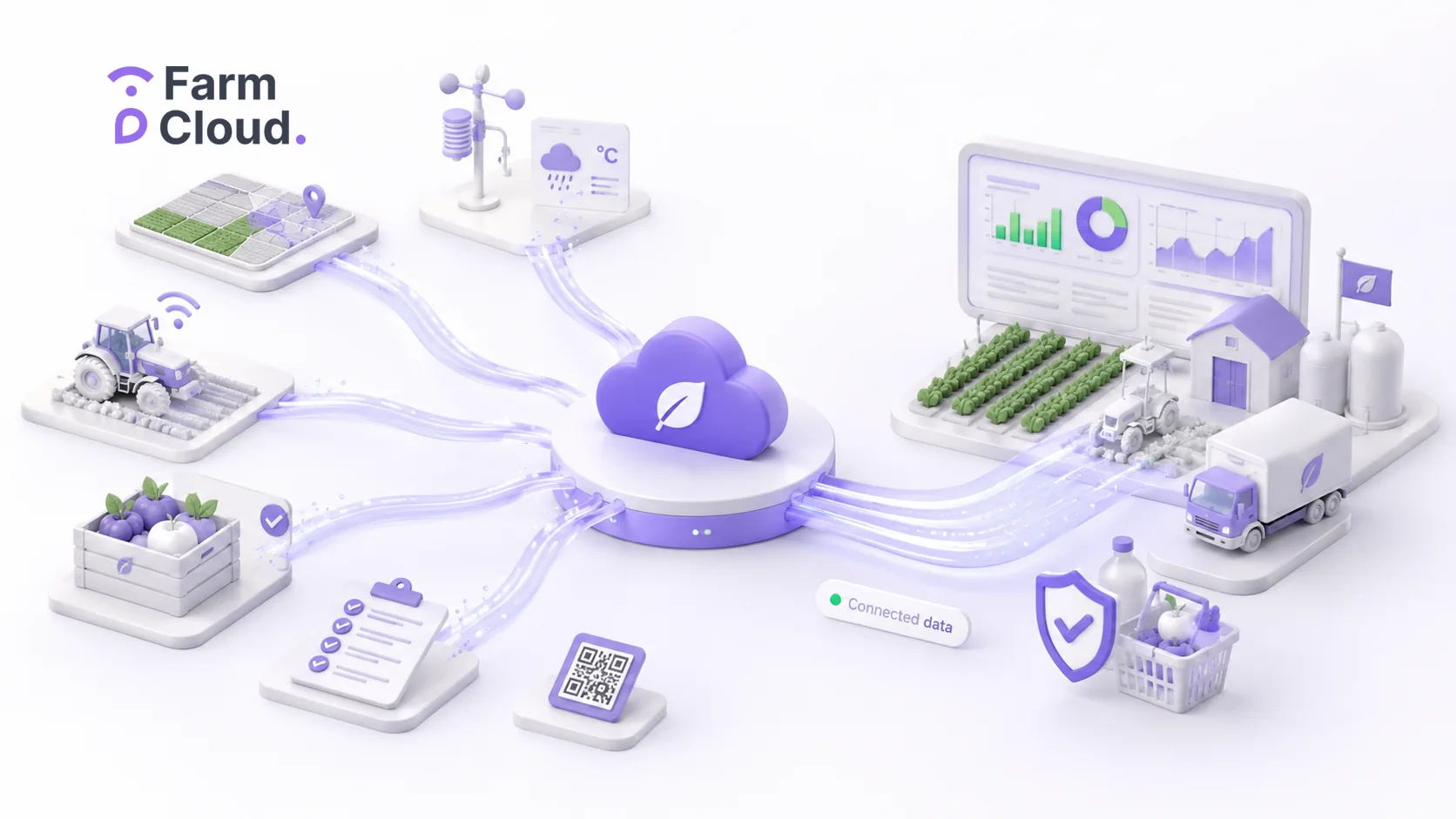
FarmCloud has been designed precisely as an integration platform. This means it can support a machinery manufacturer without the need to build the entire ecosystem from scratch: from the farmer application and farm data to service functions, telematics and machine integrations.
| Criterion | Building a proprietary system from scratch | Integration with FarmCloud |
|---|---|---|
| Implementation time | Long: analysis, design, development, testing and maintenance. | Shorter: use of a ready-made platform and configuration for OEM needs. |
| Technological risk | High, especially without experience in FMS, agricultural data and integrations. | Lower, because FarmCloud and FarmPortal operate as an existing application ecosystem. |
| Functions for the farmer | They must be created, tested and developed from scratch. | FMS functions are available: fields, crops, treatments, documentation, maps, costs and monitoring. |
| Machine integration | Requires a separate architecture, standards and maintenance. | Can be developed within FarmCloud, ISOBUS, ISO-XML, telematics and operational data. |
| Service and spare parts | Requires building a separate module or integration with internal systems. | Can be developed as part of the customer service process, requests, machine history and spare parts sales. |
| Marketing value | Visible only after implementation is completed. | Faster communication of technological advantage and a modern offer for customers. |
Table 2. Comparison of building proprietary OEM software from scratch with integrating a machinery manufacturer with the FarmCloud platform.
What could implementation look like step by step?
Implementing a digital platform for a machinery manufacturer does not have to begin with the most advanced functions. The best projects usually develop in stages: from farmer value, through service operations, to deeper machine integration and data analysis.
- A branded version of FarmPortal. Bury machine users receive access to the farm management system under the manufacturer’s brand.
- Basic farm records. The farmer adds fields, crops, machines, treatments, costs and documentation.
- Service modules and reminders. The system supports inspections, maintenance, machine history and contact with support.
- Operational data and telematics. Machines start providing data on work, location, usage time and completed tasks.
- ISOBUS and ISO-XML integration. The system supports the transfer of application maps, tasks and work data between the farm and the machine.
- Spare parts sales and online support. The user can more quickly find the right contact, spare part or request path.
- Analysis of products in the field. The manufacturer gains data for product development, service, training, marketing and spare parts stock planning.
Checklist for machinery manufacturers
For agricultural machinery manufacturers, cooperation with a digital platform should be a strategic decision, not only a technological one. Before implementation, it is worth clearly defining which processes should be improved and what value the end user should receive.
- Do customers need a branded application for farm management?
- Does the manufacturer want to develop a digital relationship with the user after the machine is sold?
- Does the service department need better machine history, requests and inspection records?
- Can the spare parts department benefit from an online channel connected to a specific machine?
- Does the technical department need data on how products work in the field?
- Does the marketing department want to communicate technological advantage and Agriculture 4.0?
- Does the manufacturer want to support application maps, ISOBUS, ISO-XML and precision spraying?
- Does the company want to reduce service response time and develop predictive maintenance?
- Can machine data support the design of future product generations?
Expert quotes and market insights
Digital integration of agricultural machines changes the relationship between the manufacturer and the user. The sale of the machine is no longer the end of contact. It becomes the beginning of a long cycle: service, data analysis, feature development and farm support.
“Agriculture is digitalising faster than most machinery manufacturers can keep up with using only their own resources — and users increasingly expect equipment to be part of a farm management system, not a separate tool. For an OEM manufacturer, this is not a threat, but an opportunity: instead of building its own system from scratch, it can offer customers a ready-made platform under its own brand — faster and without the cost of maintaining its own software development team. This already translates into specific benefits. The manufacturer differentiates its offering — it sells not only the machine, but a machine with digital tools: plant protection treatment records, service reminders and variable-rate spraying. It gains the first real contact with the user after the sale — and brand presence in the customer’s daily work, not only at the moment of purchase. Service reminders also guide the customer back to the authorised network instead of an external workshop. The next stage is telematics and diagnostics: machine work data that opens the way to predictive maintenance — planning spare parts and inspections before a failure occurs — and to improving the quality of future designs based on how machines actually work in the field. This is the development direction of the platform, not functions available today — but the value for the manufacturer appears before this stage is reached.”
“On the farm, simplicity matters most. If the sprayer, treatment map, documentation and service are connected in one process, the farmer does not have to re-enter the same information in several places.”
“For fruit and vegetable producers, a digital treatment history matters not only during inspections. It is also important in conversations with buyers, advisors and processors who expect increasingly well-structured data.”
Treatment documentation and regulatory requirements
In the sprayer segment, documentation of plant protection product treatments is particularly important. A digital system can help the farmer organise information about the product, rate, date, area, crop, operator and justification for the treatment.
Commission Implementing Regulation (EU) 2023/564 concerns the content and format of records of plant protection products kept by professional users. Source: Commission Implementing Regulation (EU) 2023/564.
For a sprayer manufacturer, this is an important context. A machine connected with an application, documentation and treatment data can become part of the compliance process. This increases value for the farmer and strengthens the manufacturer’s position as a partner in modern, responsible agriculture.
What comes next?
The beginning of cooperation between Agri Solutions, the FarmCloud product and Bury Maszyny Rolnicze marks another stage in the digitalisation of Polish agriculture. Bury, as an OEM, is taking its machines, including sprayers, into a new era of digital services. FarmCloud provides the platform that can accelerate this process.
The key direction is clear: the machine should be connected with data, service, spare parts, documentation, maps, the application and decision support. As a result, the manufacturer gains a technological advantage, while the farmer receives a more complete service around the equipment used on the farm.
More information about the scope of cooperation, functions dedicated to Bury users and the next stages of integration between FarmCloud, FarmPortal and agricultural machines will be provided soon.
To see how FarmCloud can support machinery manufacturers, agri-business companies and organisations working with farmers, visit FarmCloud for companies in the agri-food sector.
FAQ
Why does an agricultural machinery manufacturer integrate with FarmCloud instead of building its own software from scratch?
Integration with FarmCloud allows a machinery manufacturer to launch a ready-made digital layer faster: FarmPortal for farmers, machine operational data, service functions, telematics, reminders, ISOBUS integration, spare parts sales and analysis of machine performance. As a result, an OEM can shorten implementation time and focus on customer value.
What will farmers gain from connecting FarmPortal with Bury machines?
Farmers will gain access to a branded version of FarmPortal, digital documentation of treatments, machine operation data, service reminders, easier contact with support, access to spare parts, integration with application maps and tools supporting precision spraying.
Can FarmCloud support service operations and machine fleet management for an OEM manufacturer?
Yes. FarmCloud can support machine fleet management, work history, service requests, inspections, reminders, operational data and analysis of products working in the field. This helps shorten service response time and improve customer service planning.
Can ISOBUS and ISO-XML integration support precision spraying?
Yes. ISOBUS and ISO-XML integration can support the transfer of application maps, work data, rates, passes and information about completed treatments between the machine and the FarmPortal system. This is one of the development directions for precision spraying and digital treatment documentation.
What environmental benefits can result from connecting machines, data and FarmPortal?
The combination of machines, data and FarmPortal can support more precise dosing of plant protection products, reduce overlaps, improve treatment planning, reduce unnecessary field passes, lower fuel consumption and improve activity documentation. In practice, this means greater control over the farm’s environmental impact.
Can a fruit and vegetable processor or distributor benefit from digital treatment documentation?
Yes. Fruit and vegetable processors and distributors increasingly need structured data on production history, treatments, dates, plant protection products and compliance with customer requirements. Digital documentation in FarmPortal can facilitate data exchange between the farmer, advisor and buyer.
What will an agricultural advisor gain if a farm uses FarmPortal connected with machines?
An agricultural advisor will gain better access to data on fields, crops, treatments, machines, dates, rates, costs and decision history. This makes it possible to prepare recommendations faster, analyse the effects of treatments and support the farm in more precise production management.
Follow us!
Preview what we are doing and be inspired by positive changes.