The farm-to-fork strategy stops being a phrase from EU documents when a processor has to prove which field a disputed batch of raw material came from and which treatments were carried out before harvest. The biggest challenge is not the idea of sustainability itself, but the data: who collects it, who trusts it and whether it can be retrieved on the day of an audit.
In brief: the farm-to-fork strategy and production data
The farm-to-fork strategy is an EU agenda for the food system that brings agricultural production, processing, distribution, consumption, food safety and environmental impact into one model of accountability.
- Implementation does not start with an ESG report, but with order in data from fields, deliveries, samples and batches.
- Traceability in agriculture only works when the physical batch matches the digital record.
- FoodPass structures data for processors and distributors, while FarmPortal collects the field data needed for audits.
- The biggest risk is apparent compliance: documents exist, but they cannot be quickly linked to a specific delivery.
The Farm to Fork Strategy and the European Green Deal: what do they really change?
The Farm to Fork Strategy is part of the European Green Deal and affects the whole food system: from fertilisation and crop protection to processing and food waste. In 2024, the European Parliamentary Research Service noted that implementation of the strategy’s different elements was progressing at varying speeds, while some announced initiatives had still not been completed legislatively. EPRS analysis of the state of play of the Farm to Fork Strategy.
This matters for agri-food companies. Some requirements come from law, some from audits, and some from commercial contracts with retailers and buyers. A processor cannot wait until every element of the strategy becomes a regulation. A retail chain, exporter or industrial customer may ask much earlier for proof of origin, a carbon footprint, pesticide residue data or confirmation of farming practices.
FarmCloud’s position is straightforward: implementing the farm-to-fork strategy is not a marketing project. It is an operational project. If data on the field, treatment, delivery, sample and batch lives in separate spreadsheets, the company may have a sustainability narrative, but it does not have an evidence system.
In its communication COM(2020)381, the European Commission set out targets for 2030 concerning, among other areas, reducing the use and risk of pesticides, limiting fertiliser use and increasing the share of organic farming. For a Polish processor of fruit, vegetables or cereals, however, the key question is less political: can I show what happened to the raw material between the field and the intake ramp?
Sustainable agriculture and sustainable food production: where does the cost of data appear?
Sustainable agriculture does not end with fewer treatments. In practice, it requires proof that an agronomic decision was justified by weather conditions, crop monitoring, soil analysis, disease pressure, an adviser’s recommendation or the result of field scouting.
How do pesticide reduction and rational fertilisation enter production records?
Pesticide reduction without treatment records is only a declaration. An auditor, quality department or buyer will ask for the date, substance, dose, operator, field, crop and pre-harvest interval. Fertilisation adds further data: soil test results, dose plan, fertiliser type, application date and the reason for any adjustment.
Where can the carbon footprint and environmental footprint be seen?
The carbon footprint begins earlier than the factory gate. Fuel, fertilisers, energy, yield, transport distance, storage and raw material losses all affect the result. If a processor reports Scope 3, then without supplier data it is left with an industry average. That average is often enough for an initial estimate, but not for managing change.
Why does food safety depend on field data?
Food safety does not start in the laboratory. The laboratory detects a problem, but field data indicates where to look for its source. In the case of excessive pesticide residues, information about the supplier alone can be too broad. The data needed includes the plot, treatment date, harvest batch, storage location, transport and intake number.
| Challenge | Operational data | Risk if data is missing | System in the FarmCloud ecosystem |
|---|---|---|---|
| Pesticide reduction | Treatment records, dose, field, operator, pre-harvest interval | No proof of compliance and a risk of batch blocking | FarmPortal, FoodPass |
| Rational fertilisation | Soil analyses, doses, VRA maps, yield, fertilisers | ESG reporting based on estimates rather than primary data | FarmPortal, FarmCloud |
| Raw material quality | Delivery parameters, samples, laboratory results, complaints | Difficult reconstruction of the source of a complaint | FoodPass |
| ESG reporting | Environmental data, fuel consumption, fertilisers, yield, deliveries | Low report credibility and no way to compare suppliers | FarmCloud, FoodPass |
Food traceability and traceability in agriculture: from declaration to batch
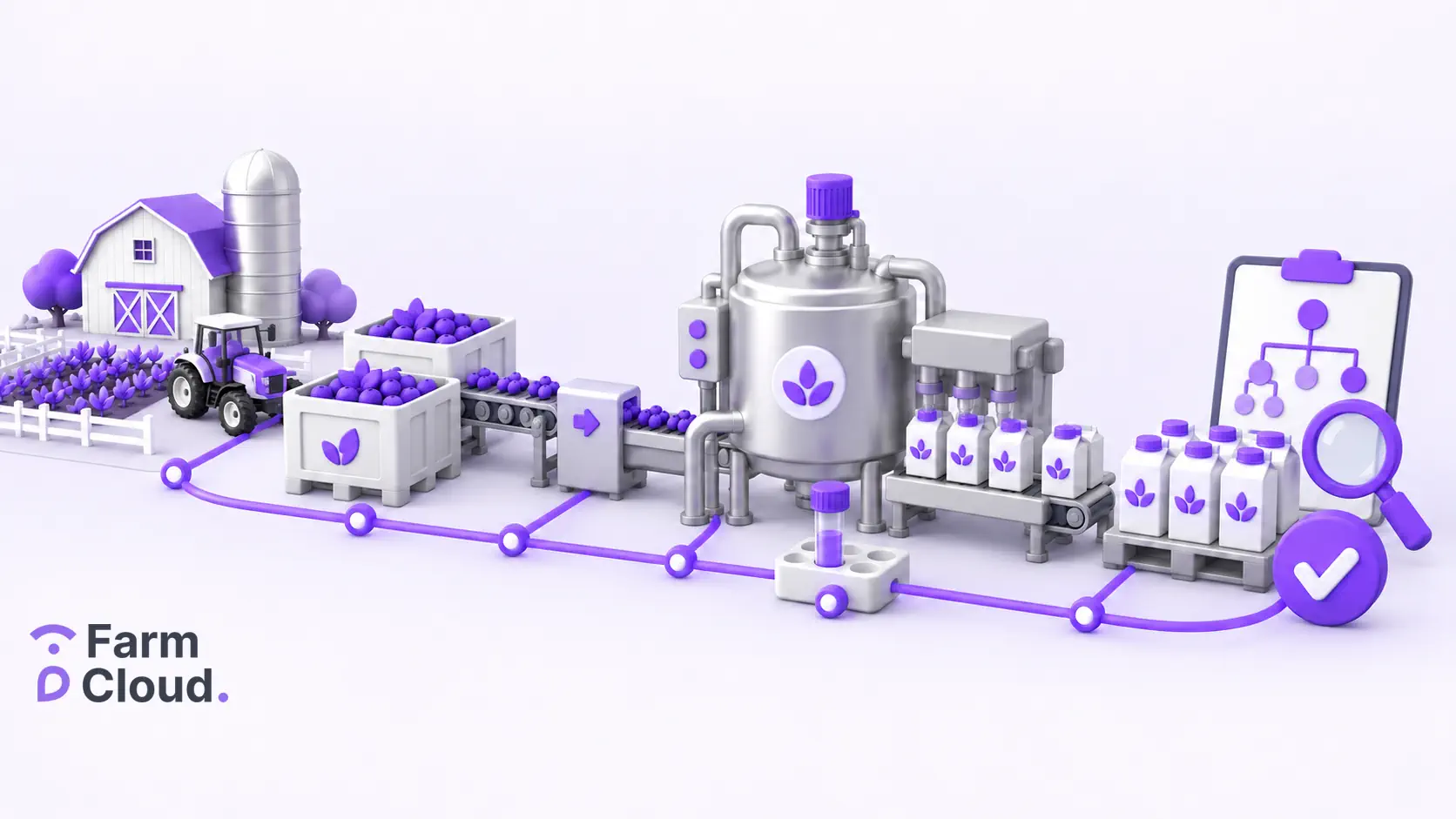
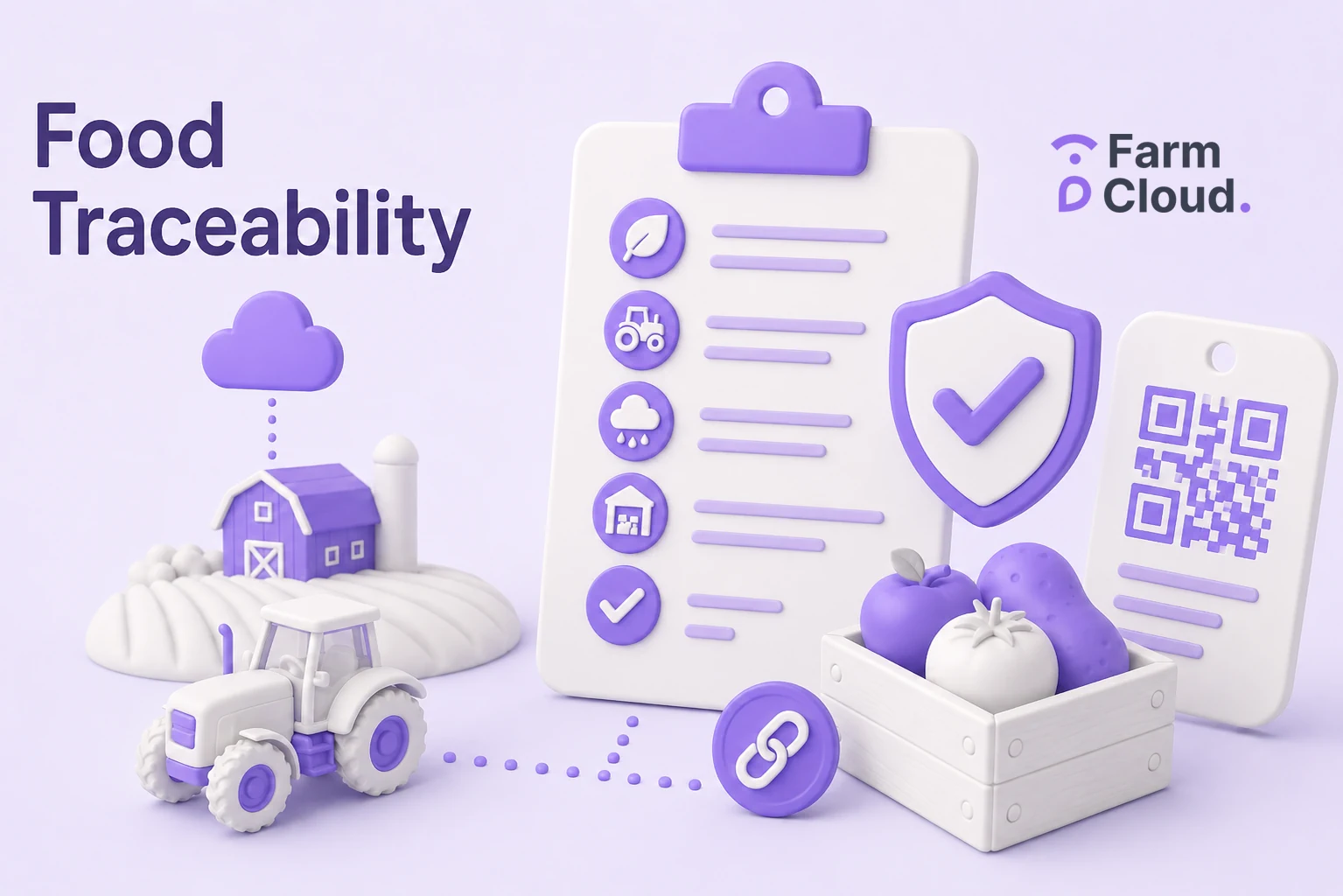
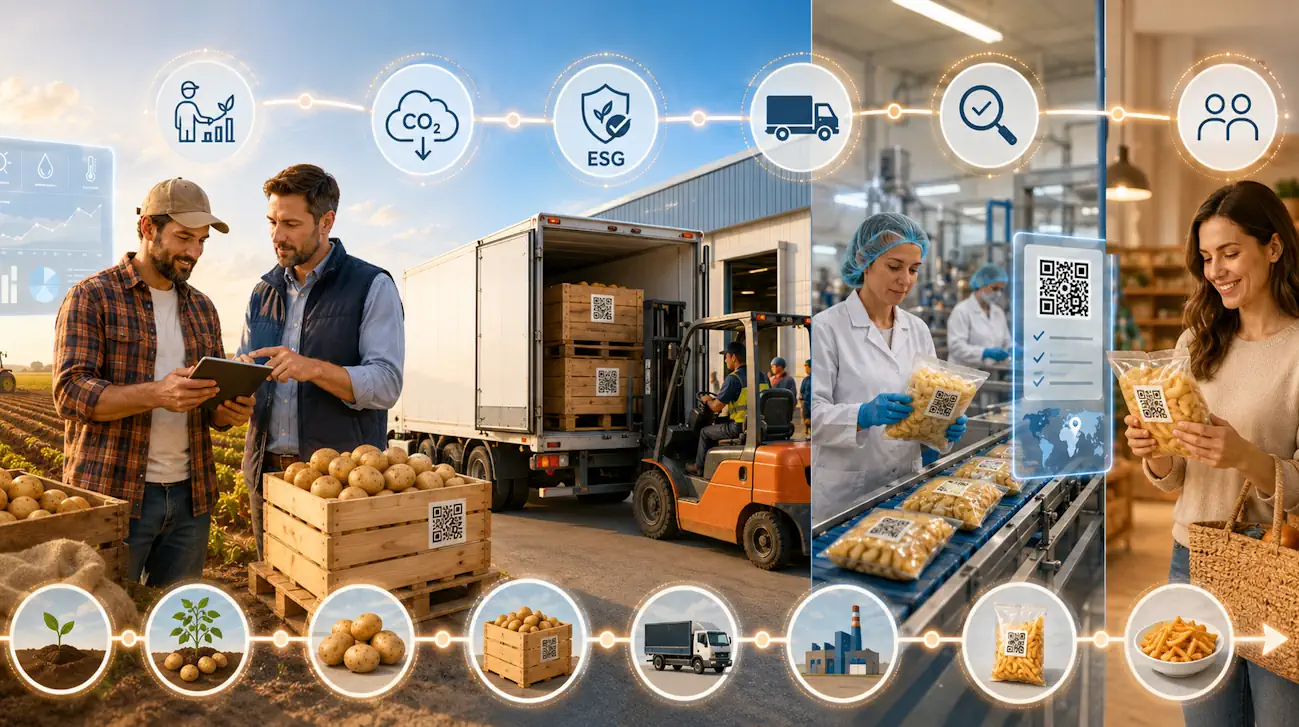
Food traceability is the ability to reconstruct the path of raw material and product backwards and forwards: from the field and supplier to the finished-product batch, buyer and any possible recall. In agricultural traceability, the weak point is usually not the database. The weak point is the moment when a physical crate, big bag, pallet or tanker receives a digital batch number.
In processing practice, the problem appears on a Friday afternoon, not during a strategy workshop. The quality team receives a test result, the buyer wants to know whether further deliveries should be stopped, and production asks which finished-product batches are at risk. If the only link is the shift supervisor’s notes and an Excel file called “deliveries_final_3”, the decision takes too long.
Traceability is not a compliance cost. It is operational insurance for the day a batch has to be withdrawn. When you do not know which raw material deliveries went into a specific production run, you hold back more than you need to. That hurts more than the cost of the system subscription.
| Process | Scattered documentation | Digital FoodPass / FarmCloud model | Audit effect |
|---|---|---|---|
| Raw material intake | Scale record, spreadsheet, delivery note, quality note | Batch number, supplier, field, weight, photos, quality status | Faster reconstruction of the delivery source |
| Sample collection | Separate form and manual re-entry of the result | Sample workflow, laboratory, result and decision in one record | Fewer gaps between sample and batch |
| Farm audit | PDFs, photos on a phone, signed protocols | Checklist, photo documentation, geolocation, history of recommendations | Evidence that corrective actions were completed |
| Batch recall | Manual searching across several departments | Backward and forward traceability by batch number | Narrowing the decision to specific deliveries |
The food supply chain: what data must FarmCloud and FoodPass connect?
The food supply chain is only as strong as its weakest documented point. In fruit and vegetables, this is often the stage between harvest and first intake: workers, crates, cold storage, batch mixing and transport. In cereals, it may be storage and the combining of lots. In higher-risk products, samples and laboratory results are added to the chain.
The European Union reports that more than 58 million tonnes of food waste are generated each year, around 129 kg per inhabitant, and that 47% of waste arises before households: in primary production, processing, food service, retail and distribution. For agri-food companies, this means pressure not only to reduce losses, but also to improve data on quality, deadlines, cooling and complaints. European Commission and Eurostat data on food waste.
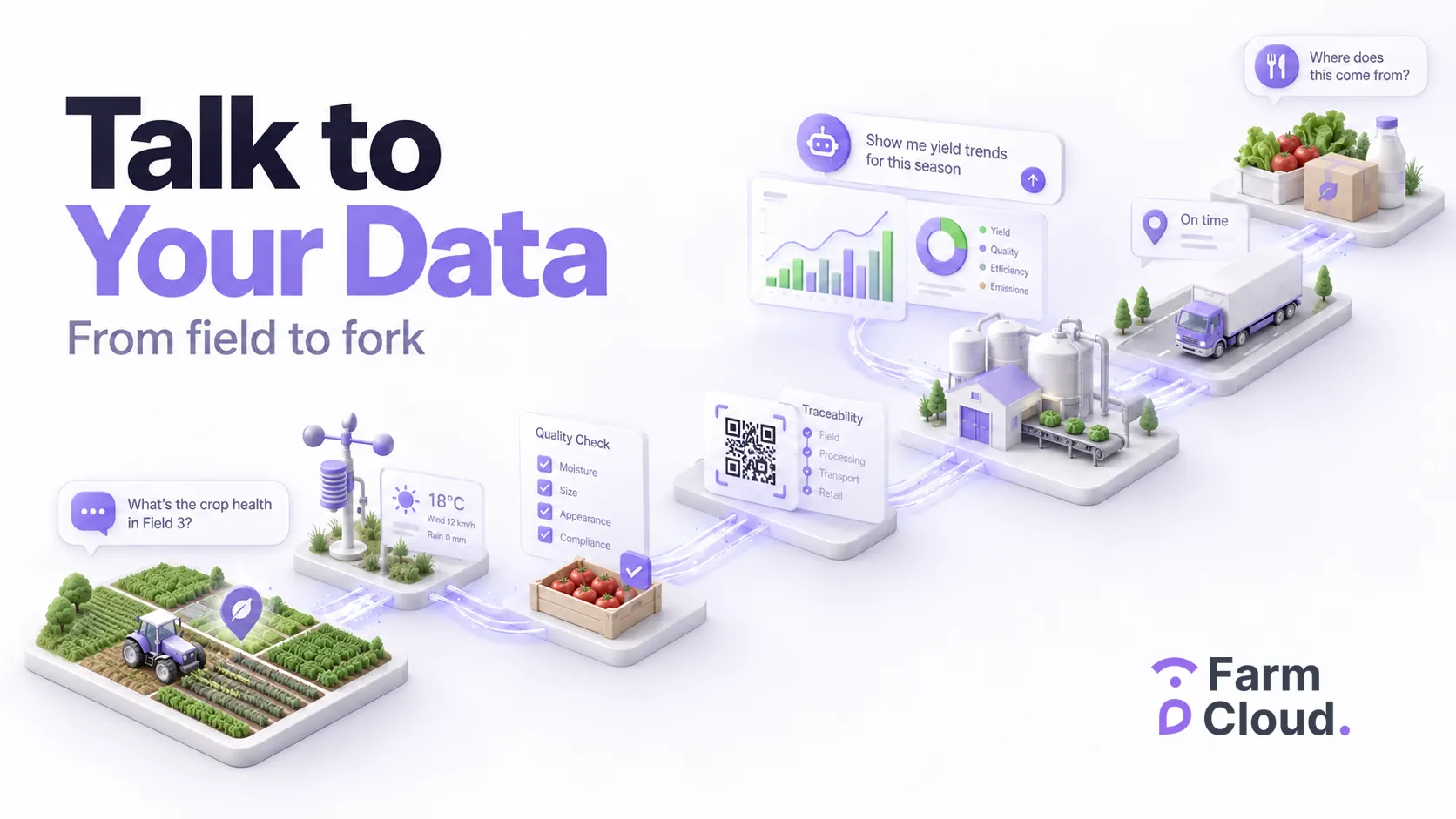
FarmCloud connects three types of data: field data from FarmPortal, delivery and quality data from FoodPass, and integration data from enterprise systems such as ERP, WMS, CRM, laboratories, IoT and telematics. Without this integration layer, every company builds its own bridge out of spreadsheets. The bridge works until an audit or complaint arrives.
Standards matter here. GS1, batch numbers, QR codes, audit logs, APIs and ISOXML are not add-ons for the IT department. They are the language in which data from the field can move to the processing plant and then on to the customer. Without a shared language, data is retyped manually. Manual retyping creates errors.
How do FoodPass, FarmCloud and FarmPortal support the farm-to-fork strategy?
FoodPass for managing and monitoring the supply chain structures traceability, quality control, audits, certificates, samples, contracting and delivery settlements. In the farm-to-fork model, it is a working system for processors, distributors, advisers and quality teams.
FoodPass: food traceability, audits and the digital product passport
In FoodPass, every delivery can receive a digital passport: batch number, supplier, field, date, weight, documents, inspection results and quality decisions. When the laboratory rejects a series, the quality team does not start by looking for a binder. It starts with the batch.
FarmCloud: integration of data from farms, distribution and processing
FarmCloud is the layer that links data from applications, sensors, factory systems and advisory tools. The FarmCloud article on MRV in food processing develops the topic of the cost of missing farm data in emissions reporting and management.
FarmPortal: the digital farm, treatment records and crop monitoring
FarmPortal as an FMS for farms and a grower portal collects the data that FoodPass later needs: fields, crops, treatment records, fertilisation, observations, photos, workers, machinery, costs and harvests. It is a source of field data, not just a note-taking app.
Benefits for processors, advisers and agri-food companies
The benefits of digitising the farm-to-fork strategy vary depending on the role in the chain. A quality director does not need the same view as an agronomist, and a distributor of agricultural inputs does not work in the same way as a machinery manufacturer. The common denominator, however, is control over data.
| Group | Problem | Practical benefit | Example metric |
|---|---|---|---|
| Fruit, vegetable and food processors | Batches, samples and documents sit in different departments | Faster reconstruction of origin and quality decisions | Batch identification time: minutes instead of hours, model-based |
| Agricultural input distributors | Knowledge about the farm remains in the representative’s head | CRM and advisory work based on fields, crops and recommendation history | Client base coverage with field data: 60–80%, model-based |
| Agronomists and advisers | Recommendations are not linked to subsequent delivery quality | Better analysis of recommendations, treatments, diseases and batch results | Share of recommendations with confirmed implementation: 70–90%, model-based |
| Agri-food marketing and sales | Communication is detached from the season and crop | Segmentation by crop, region, status and needs | Response to seasonal campaigns: +10–25%, indicative |
| Agricultural machinery manufacturers | After the sale, the machine loses its digital relationship with the customer | Integration of telematics with the work passport and farm data | Active machines with data: 50–70%, model-based |
The figures in the table are indicative and model-based. They are intended to show typical implementation KPIs, not to declare the result achieved by any specific customer.
Model case study: soft fruit processor and batch traceability
Model example based on real scenarios. The data is used to illustrate the process and should be verified before being used as the result of a real implementation.
Profile: a medium-sized soft fruit processor, 75 suppliers, around 1,400 ha of contracted crops, seasonal raw material volume of 6,200 t and 420 intake batches at the peak of harvest. Problem: a customer complaint relating to one series of frozen product, with incomplete linking of sample results to deliveries from the intake ramp.
Before implementation, the quality team had to check weighing records, deliveries, laboratory results and farm protocols in four different places. Some information was held in the ERP system, some in spreadsheets, and audit photos were stored on advisers’ phones. For a single complaint, checking the full path took a modelled 6–10 hours of work by several people.
Post-implementation process model: FarmPortal collects field data and treatment records, FoodPass manages suppliers, samples, certificates, raw material intake and batch blocks, while FarmCloud integrates data with the warehouse system and quality report. The batch number becomes the axis of work: from field to cold store, from cold store to production, and from production to the customer.
| KPI | Before data structuring | After model implementation | Comment |
|---|---|---|---|
| Time to reconstruct the batch path | 6–10 hours | 20–45 minutes | Indicative data, dependent on ERP integration and scanning discipline |
| Share of deliveries with complete documentation | 55–70% | 85–95% | Requires a supplier checklist and pre-season reminders |
| Batches preventively blocked after a complaint | Entire production day | Specific batches linked to the delivery | Does not eliminate risk, but narrows the quality decision |
| Time to prepare an audit package | 1–2 working days | 2–4 hours | Applies to documents already present in the system |
The conclusion is uncomfortable but useful: technology will not fix a process in which employees do not assign batches at intake or mix raw material without registration. FoodPass shortens the evidence path only when the company treats the batch number as part of the production process, not as a field to be filled in afterwards.
Limitations and implementation mistakes in the farm-to-fork strategy
The most common mistake is trying to implement everything at once: ESG, traceability, a grower portal, samples, ERP, laboratory and management reporting in one project. That scope looks good in a presentation, but during the harvest season it loses to the queue at the intake ramp.
The second mistake is ignoring the farmer. If the system requires additional work from the farm without a clear benefit, the data will be late or incomplete. For the farmer, the value lies in a simple treatment register, easier contact with the adviser, less retyping and faster confirmation of documents.
The third mistake is trusting the report without checking the input data. An ESG report, digital product passport and declaration of sustainable food production are credible only when someone can return to the source: the field, crop, treatment, batch and quality decision.
FarmCloud’s implementation recommendation: start with the path of one batch. Choose one raw material, one region, 20–40 suppliers and one plant. Map the data from field to customer, identify the gaps, and only then expand the system to further species, suppliers and integrations.
FAQ: farm-to-fork strategy, traceability and FoodPass
What does the farm-to-fork strategy mean for a food processor?
For a processor, the farm-to-fork strategy means pressure to improve documentation of raw material origin, delivery quality, food safety and environmental reporting. The most difficult part is not the audit itself, but quickly connecting the batch number with the field, supplier, sample, laboratory result and delivery history.
How does the Farm to Fork Strategy affect farmers?
The Farm to Fork Strategy increases the importance of farm data: treatment records, fertilisation, field observations, harvests and quality parameters. A farmer does not need to start with an extensive IT system. The first step is to structure fields, crops, treatments and batches in one tool, and then share the data with the buyer.
Does food traceability require blockchain?
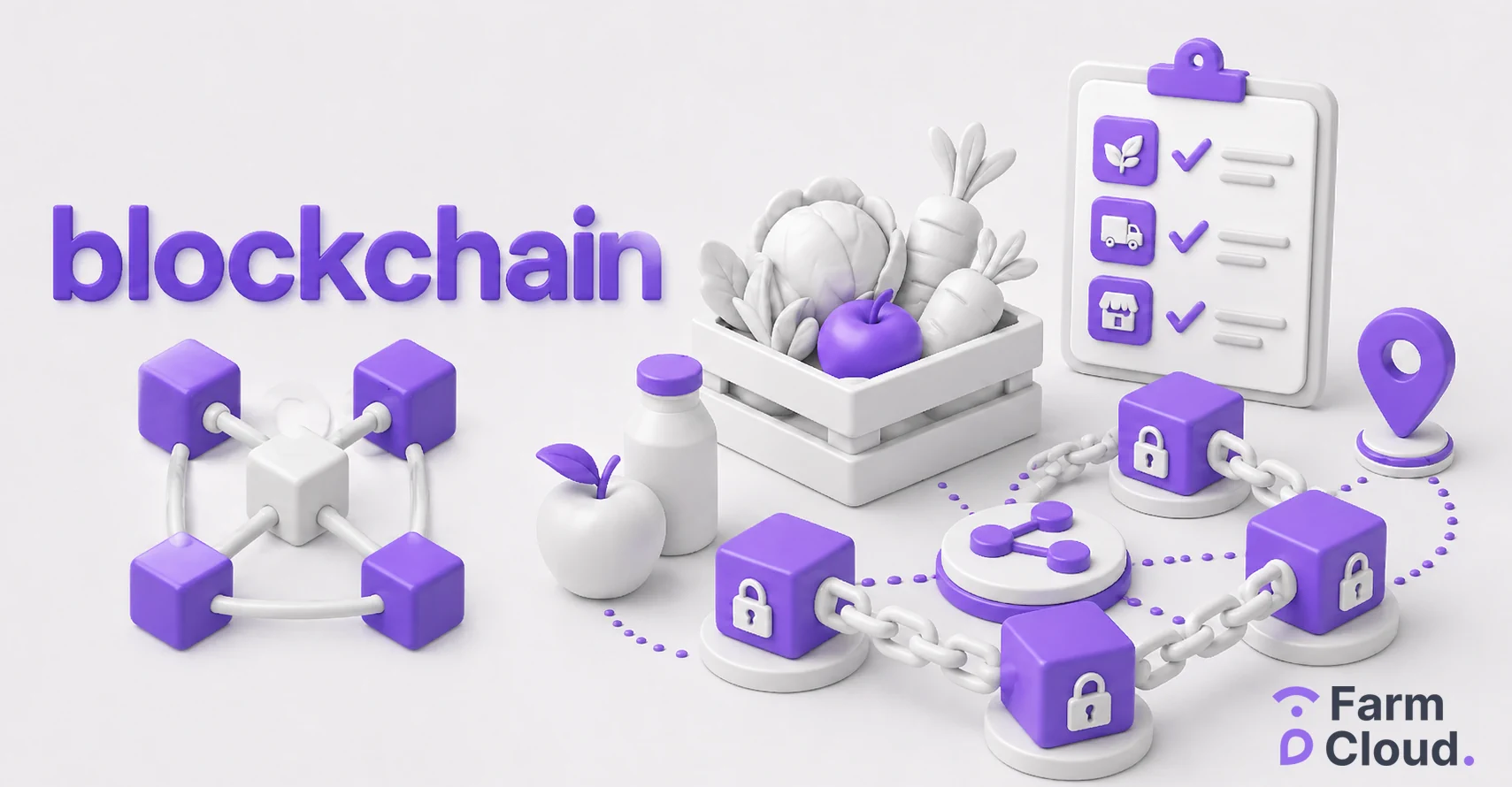
No. Food traceability primarily requires a reliable data collection point, batch numbers, links between delivery and production, and a change log. Blockchain can protect the integrity of a record, but it will not confirm whether an employee assigned a harvest to the correct plot. Procedure and data validation matter more than the recording medium.
What field data is needed for traceability in agriculture?
Traceability in agriculture requires at least: field identifier, crop, treatment date, plant protection product or fertiliser used, dose, person carrying out the work, harvest date, weight, batch number and buyer. In practice, processors also ask for samples, pesticide residues, certificates and the farm audit history.
How does FoodPass help with quality and food safety audits?
FoodPass structures the audit around the supplier, batch, samples, documents and quality decisions. Instead of gathering files from email, binders and spreadsheets, the person responsible for quality can see the supplier history, document status, test results and batch blocks. This reduces the time needed to prepare for an auditor’s questions.
Can FarmPortal replace paper farm documentation?
FarmPortal can replace a significant part of operational paper documentation, especially records of fields, crops, treatments, fertilisation, observations and work. The requirements of a specific audit, quality programme or institution should still be checked. The safest implementation model is to use the digital register as the source of data and export reports into the required forms.
How can implementation start without a large IT project?
The best starting point is one data stream: supplier, field, treatment, harvest and delivery. For 20–40 farms, a pilot can cover a grower portal, basic treatment records, batch numbers and delivery reporting. ERP, WMS, laboratory and financial system integrations should come only after the process has been tested.
Can model-based data be used in ESG reporting?
Model-based data can help assess the gap and prepare the process, but it should not replace primary data where the buyer, auditor or standard requires farm-level information. In ESG and Scope 3 reporting, estimated data must be clearly separated from data from fields, invoices, treatments, fuel use and fertilisation.
Glossary: the farm-to-fork strategy and the food supply chain
- Farm to Fork Strategy
- An EU strategy for a more sustainable food system. In practice, for agri-food companies it translates into requirements for data, quality, environmental footprint and cooperation with suppliers.
- European Green Deal
- A set of EU policies on climate, the environment and the economy. The farm-to-fork strategy is one of its elements concerning food and agriculture.
- Traceability
- The ability to identify the path of raw material or product backwards and forwards. Example: from a batch of frozen raspberries to the supplier, field, sample, harvest and end customer.
- Batch number
- An identifier linking a physical batch of raw material or product with a digital record. Without a batch number, even the best system cannot reconstruct a reliable delivery path.
- Digital product passport
- A set of data on a product’s origin, quality, documents, environmental footprint and history. In FoodPass, the passport is based on data from deliveries, fields, inspections and audits.
- MRV in agriculture
- Monitoring, reporting and verification of environmental data. In agriculture, this relates to emissions, fertilisation, fuel, yield and field practices, among other areas.
- FMS system
- Farm Management System. FarmPortal performs this role for fields, crops, treatments, documentation, workers and machinery.
- Recall
- The withdrawal of a product from the market or supply chain. Good traceability helps narrow a recall to specific batches, instead of blocking too broad a scope of production.
Summary and practical next step
For many companies, the farm-to-fork strategy will be less a regulatory problem and more a test of data maturity. Whoever can connect the field, treatment, delivery, sample, batch, quality and buyer has the foundation for traceability, audit, ESG and a serious conversation with a retailer.
The best first step does not require a major reorganisation. Take one raw material category, one season and one group of suppliers, and check whether you can move from a product batch to a specific field in less than an hour. If not, start the FoodPass and FarmPortal implementation with that gap, not with another strategic report.
See the food passporting case study in the FarmCloud ecosystem and compare the described process with your own data flow from field to buyer.
Sources and data timeliness
Current as of June 2026. This article uses: European Commission, Communication COM(2020)381, “A Farm to Fork Strategy for a fair, healthy and environmentally-friendly food system”; EPRS, “EU farm to fork strategy: State of play”, 2024; European Commission and Eurostat food waste data, 2025; FarmCloud, FoodPass and FarmPortal product materials.
Follow us!
Preview what we are doing and be inspired by positive changes.