The Agricultural Advisory Centre (CDR) is organising a training session on “Farm management using artificial intelligence” on 19 November 2026. The programme includes FoodPass and FarmPortal, two connected tools in the FarmCloud ecosystem. We will show what happens to farm data when it is also needed by an adviser, a processor and a quality department.
Published: | Author: FarmCloud Editorial Team | Publisher: Agri Solutions Sp. z o.o.
Last updated:
The FarmCloud Editorial Team, run by Agri Solutions, covers digital solutions for farms, advisers, processing businesses and food supply chains.
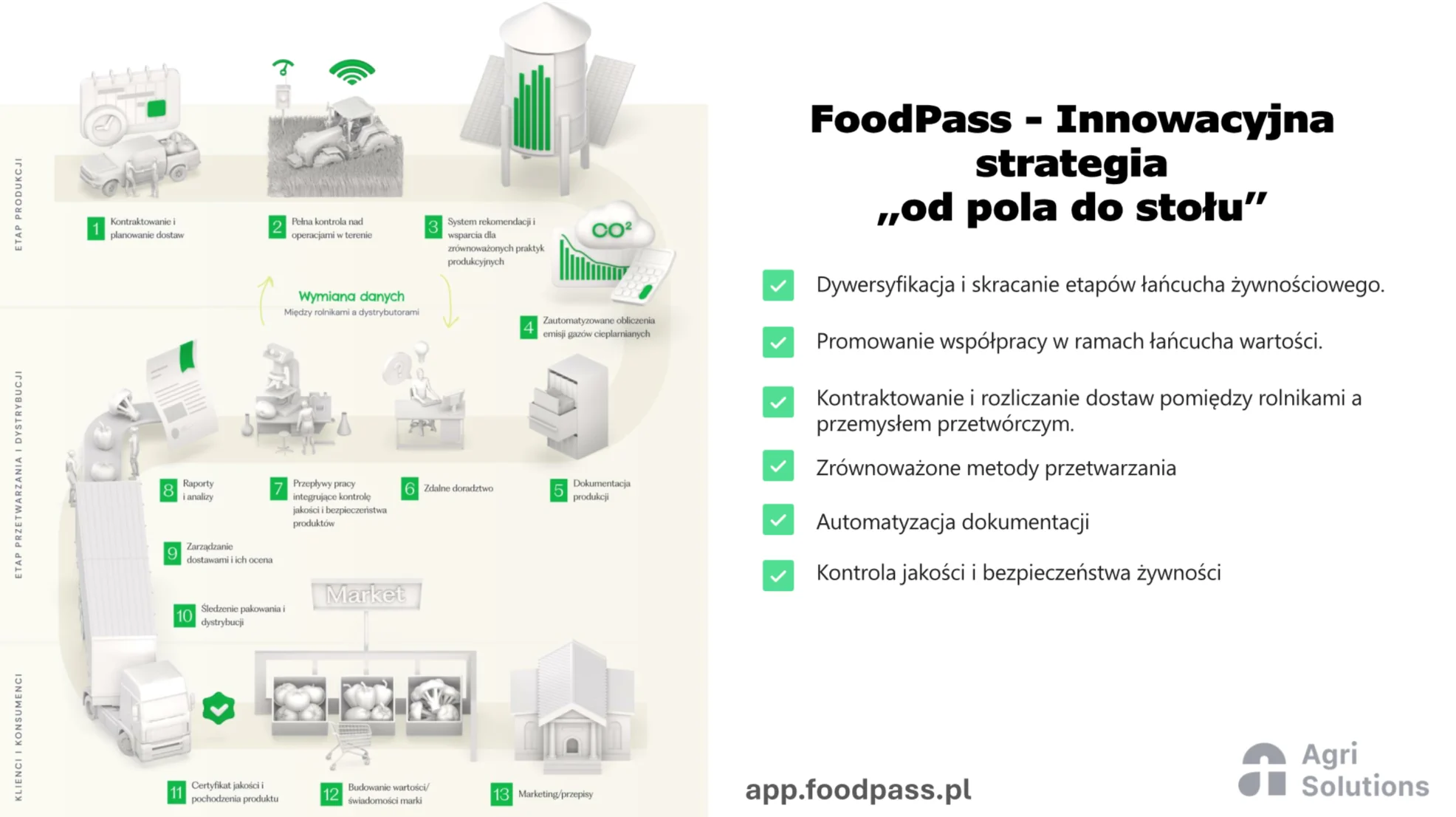
FoodPass is a platform for managing supplier collaboration, quality and food traceability. It connects agricultural production data with contracting, raw material intake and distribution processes. FarmPortal provides the field context: crops, treatments, observations and production data shared on agreed terms.
At a glance
The CDR training focuses on the practical use of AI in agriculture. We will present FoodPass as the collaboration layer between producers and raw material buyers, and FarmPortal as a source of farm data and a tool supporting agronomic decisions. Together, they connect crop monitoring with contracting, quality control, delivery documentation and batch origin tracking.
- Date: 19 November 2026, 9:00–15:00, online via Microsoft Teams.
- Organiser: Agricultural Advisory Centre in Brwinów, Poznań Branch.
- Registration: until 18 November 2026, subject to CDR eligibility rules.
Why is CDR connecting AI with farm management?
CDR plans to cover artificial intelligence, data analysis and practical applications that support everyday decisions in agricultural production. Its official announcement explicitly names FoodPass for supply chain management and FarmPortal for monitoring and controlling agricultural production.
This is an important connection. A sound recommendation about a treatment or harvest date becomes more valuable when the outcome can subsequently be linked to a specific delivery, its quality and the buyer's requirements. An algorithm alone cannot ensure raw material traceability: accurate records of fields, batches, deliveries and tests are also needed.
How do FoodPass and FarmPortal work together in the farm-to-fork strategy?
FarmPortal as a farm application and grower portal collects information about fields, crops, treatments, weather, soil, machinery and harvests. FoodPass for supply chain management extends collaboration to contracts, deliveries, quality control, audits, documents and batch traceability.
| Stage | FarmPortal | FoodPass |
|---|---|---|
| Production planning | Fields, crops, work and treatment schedules | Contracts, quality requirements and delivery plans |
| Monitoring and advisory services | Observations, satellites, disease models, weather data | Oversight across suppliers, recommendations and communication |
| Harvest and intake | Information about harvests and raw material origin | Batches, weight, documents, inspection results and settlements |
| Quality and traceability | Crop history and completed treatments | Tests, audits, batch status and origin tracking |
Roles and data flows between FarmCloud applications
For a processor, the key point is that data does not have to stop at the farm gate. Access to information from growers does, however, require an agreed scope of data sharing and reliable event recording. FoodPass cannot conjure up the history of a batch that nobody identified in the first place.
What will we demonstrate during the CDR training?
Using FoodPass, we will demonstrate collaboration with a network of growers: from raw material contracting and communication, through production oversight, to delivery intake, quality control and reporting. We will also see how data entered in FarmPortal can support agronomic advisory services and the documentation required by the buyer.
- Grower portal: sharing selected crop information, recommendations, documents and observations with an adviser or buyer.
- Contracting and logistics: planning delivery quantities and dates, assessing suppliers, and settling deliveries based on weight and quality.
- Food safety: audits, sampling, laboratory results, documentation and handling batches that require further investigation.
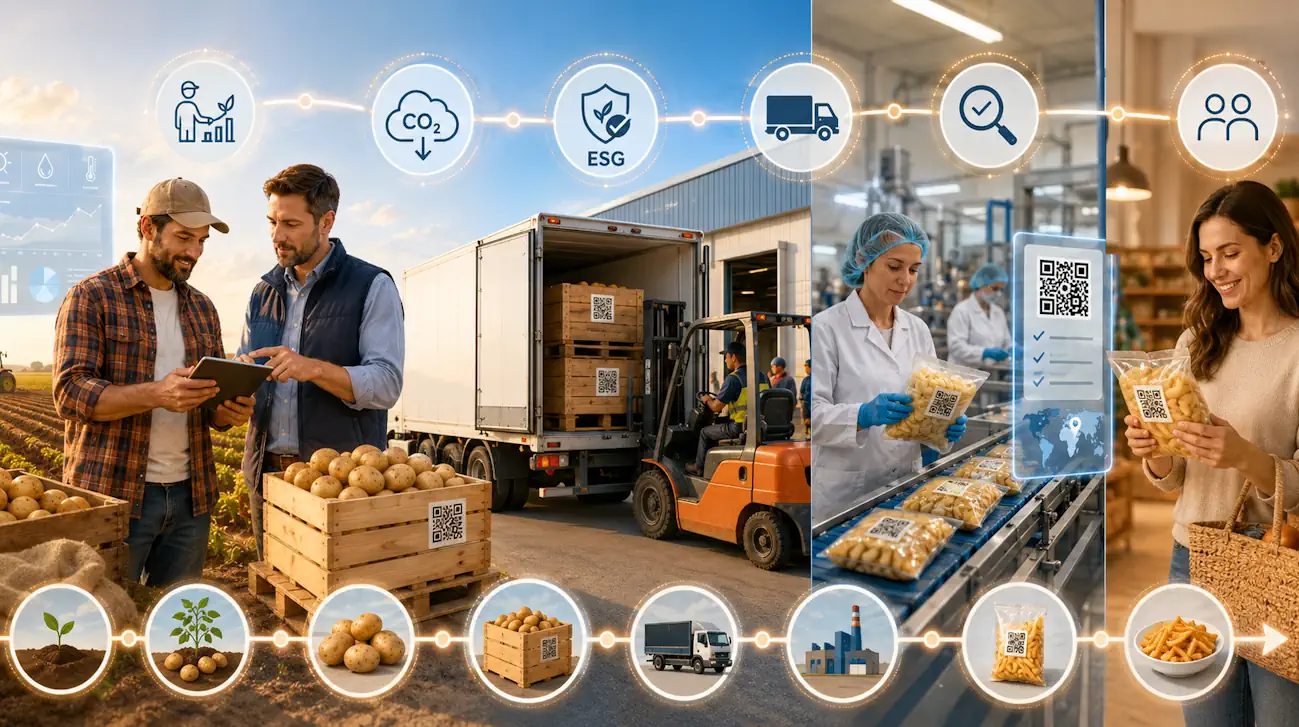
- Traceability: linking a delivery to its producer, field, crop history and the product's subsequent movement.
- Environmental data: collecting information about fertilisers, fuel and production as the basis for environmental footprint and Scope 3 emissions analyses.
In the artificial intelligence segment, we will discuss analytics and decision support systems in FarmPortal: fertilisation, irrigation, crop protection, satellite data and crop condition monitoring. FoodPass is not the same thing as an AI model. Its role is to connect analytical results and field data with real purchasing, quality and logistics processes.
From field to batch: what happens when a test result raises concerns?
Imagine a facility receiving fruit from ten growers. One delivery is sent for additional testing for plant protection product residues. The quality department needs to establish which plot the raw material came from, which treatments were recorded before harvest and whether similar material has already entered other batches.
FarmPortal provides the production history at farm level, while FoodPass links it to intake, the batch number, the sample and the quality decision. This reduces the need to manually piece together spreadsheets and messages. Effectiveness nevertheless depends on correctly identifying the physical delivery and on the completeness of data in both systems.
An illustrative example developed for this article; it does not describe an actual implementation or a measured outcome.
Where does AI's role end and human responsibility begin?
A disease model may indicate an elevated risk of infection, and satellite analysis may suggest a location for field inspection. Neither can independently confirm the cause of a problem or a delivery's compliance with the buyer's requirements. Decisions on treatments, batch acceptance and release should be based on verified data and assessment by the responsible people.
That is why we recommend digitising the entire process, rather than simply adding AI to existing spreadsheets. Transfers of responsibility are particularly important: from grower to transport, from the receiving dock to the laboratory, and from quality control to dispatch. We discuss these points further in our article on the practical challenges of the farm-to-fork strategy.
How can you take part in the CDR training?
The training session “Farm management using artificial intelligence” will take place on 19 November 2026, from 9:00 to 15:00, on Microsoft Teams. It is organised by the Agricultural Advisory Centre in Brwinów, Poznań Branch. The official CDR training announcement provides the participation rules and programme.
Registration is open until 18 November 2026 via the e-CDR training platform. Participation is free for advisers employed by public agricultural advisory bodies and chambers of agriculture; for other participants, the fee is PLN 200 including VAT. CDR states that places are allocated in order of registration and that completing the form does not itself confirm acceptance.
Before the training, it is worth preparing one specific question: how can data about a crop, treatment or harvest be connected to the raw material buyer's requirements? This is where the purpose of FarmPortal and FoodPass working together becomes clearest.
Follow us!
Preview what we are doing and be inspired by positive changes.